

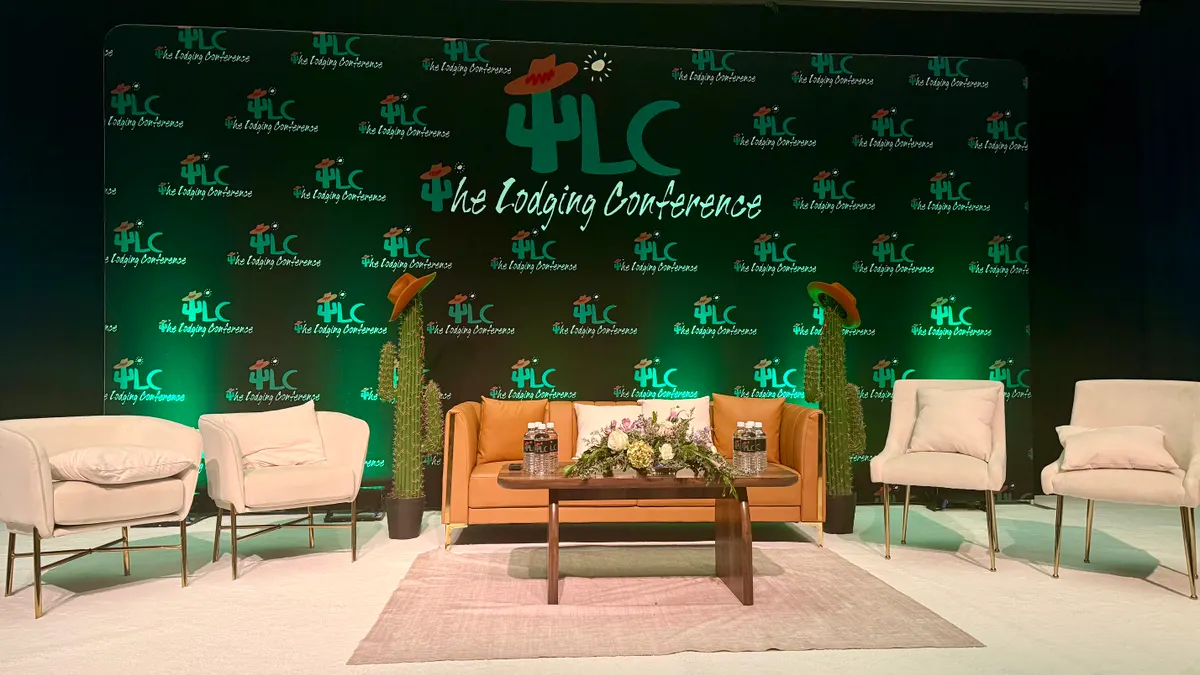
PHOENIX — At this year’s Lodging Conference, hotel executives, analysts and leaders expressed optimism about the state of the industry, despite geopolitical setbacks and economic pressures.
As hotels navigate rising expenses and changing consumer demands, they are seeking ways to stand out in popular segments such as luxury and outdoors-focused accommodations.
Meanwhile, the rapid rise of artificial intelligence presents certain challenges — and opportunities — for hotels, including around distribution and the guest experience.
Hotel Dive sat in on several panel discussions at the conference. Below are four takeaways from these sessions:
Lodging industry in ‘fairly good shape’ despite volatility
While the hotel industry has regained momentum this year following a rocky 2025, it has not yet regained its operating leverage, in part due to rising costs, said Isaac Collazo, senior director of analytics at STR.
He noted that year-to-date, ADR is up 3.7% year over year, which is above the rate of inflation, stemming from the impact of this summer’s World Cup tournament. Excluding the months of June and July, ADR is up roughly 2.9% YOY, he said.
Despite improved total revenues and overall stronger top-line performance, “undistributed expenses are growing slightly faster,” Collazo added.
“Demand and RevPAR trends are moving in the right direction, and for the first time in a while, it feels somewhat normal and sustainable,” he said. “But pricing power remains limited, and expense growth continues to pressure margins.”
Additionally, in his remarks, Bernie Baumohl, chief global economist at The Economic Outlook Group, noted that “the lodging industry is in fairly good shape.”
“We’ve got strong hotel demand at a time when supply is still severely constrained,” Baumohl said.
“Despite all of the volatility, all of the economic and geopolitical shocks, the U.S. economy has been able to actually digest this and without faltering at all,” Baumohl said. This is in part due to the country's investment in the artificial intelligence boom and “resilient consumer spending,” which has been “reflected in revenues going into the lodging industry.”
Baumohl identified three risks hoteliers should keep an eye on in 2027: a rise in energy prices, including electricity rates; a potential slowdown in consumer spending; and President Trump’s decisions in the last two years of his term, pointing specifically to his unpredictability.
AI impacts distribution, guest experience
As artificial intelligence sweeps across industries, Shai Zelering, managing partner of Brookfield's Real Estate Group, said during a general panel of C-suite leaders that he believes AI is the “second greatest change” in the hotel industry after the digital revolution.
The technology is changing how guests search for and book properties, which presents the “biggest disruptor” to online travel agencies in particular, said Keith Pierce, co-CEO of Sonesta International Hotels. During another C-suite panel, Pierce said AI represents a “paradigm shift,” and will impact how marketers spend.
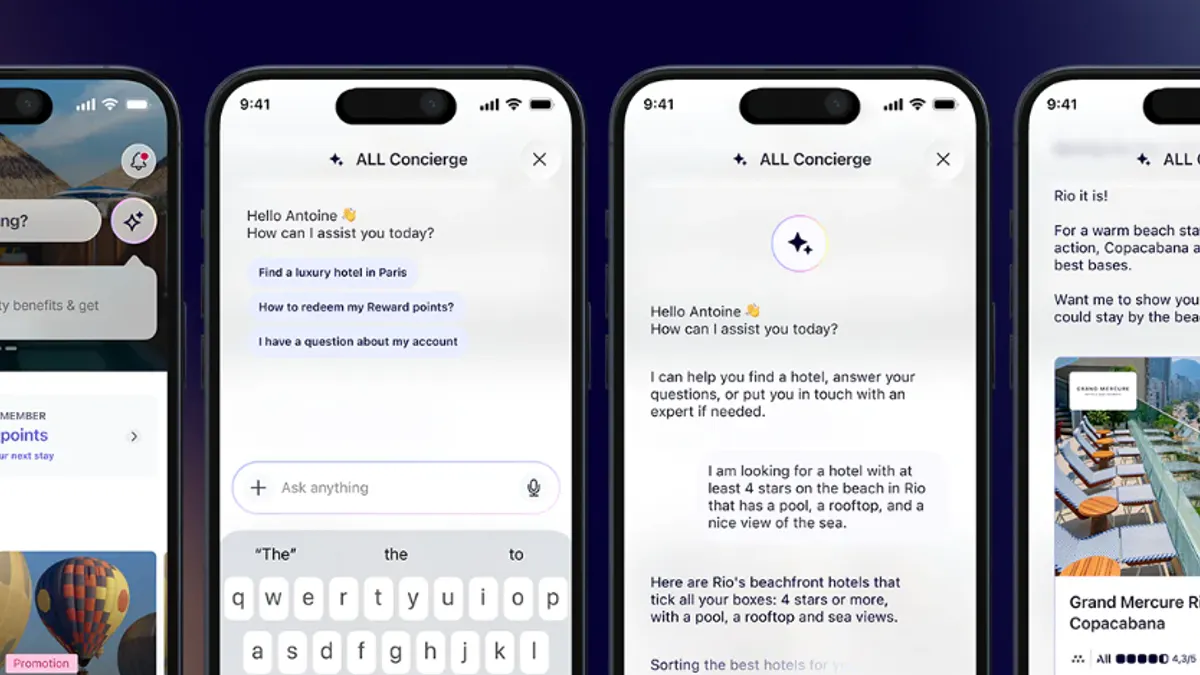
“Not only is it a technology shift, but it changes the way in which you think about your [marketing] spending. It changes the way you think about how your brand is represented,” Pierce said. Needing to compete in this new search environment, several hotel companies have rolled out guest-facing AI this year.
On an earlier panel, Craig Smith, CEO of Aimbridge Hospitality, said that he has asked AI consultants about who’s going to win the travel search race: OTAs or brands. Their response has been a 50-50 split, he said.
“The real race now is to say, ‘who can get ready for this?’” Smith said.
He added that changing traveler behavior “is probably going to start with leisure” travelers.
While challenging for hotels to navigate, AI presents an opportunity for brands to offer more personalized experiences to guests, said Ryan Rivett, president and CEO of My Place Hotels.
“AI is allowing us, like never before, to turn a transaction — that is, buying a hotel room for the night — into a conversation, into a relational narrative,” Rivett said during a general C-suite panel. “No longer are you looking at a list of bullet-pointed criteria to make a selection for the hotel, but you're asking the AI agent, regardless of the platform, what unique attributes about the property are going to line up with your mission, your goals, your preferences.”
Outdoors-focused hospitality forges ahead
The unconventional hospitality market continues to grow as more consumers seek unique experiences in nature, brand leaders said during a panel on the outdoors sector, which includes glamping and cabin stays.
Brad LeBlanc, senior vice president and chief development officer at BWH Hotels, said a “new generation of travelers” has “fundamentally changed” travel behavior, partly leading to the rise in outdoors-focused hospitality.
Younger travelers increasingly want a true, immersive experience and access to nature-inspired amenities that don’t exist in a vertical hotel, said Leon Fisher, chief sales officer at Zook Cabins, which builds Amish-style log cabins and tiny homes.
“What we see is people want to spread out, immerse themselves in the outdoors and nature while being in the cabin [and] having that campfire experience at nighttime,” Fisher said.
Similarly, Under Canvas seeks locations “off the beaten path” to provide guests with the feeling of camping with “glamping”-style comfort, said Noah Brodsky, CEO of the upscale outdoor hospitality company.
However, one obstacle to development in such locations is entitlements, often granted by local governments, “who don’t know how to treat this corner of industry,” Brodsky said. Additionally, the infrastructure, financing, labor and supply-chain capacity behind these projects present challenges for outdoor brands.
According to David Murray, president and CEO of luxury outdoor hospitality brand MScapes, the market is a “long, long way from saturation.” He also noted there are opportunities to attract business outside of the peak season, including on weekdays and for corporate retreats and leadership events.
Brodsky predicts more consolidation in the outdoors space, with companies like his Under Canvas acquiring individual operators. Further ahead, over the next five to 10 years, he thinks larger hospitality brands will enter the space.
“Consumers are looking for more experiential ways to travel, and they've got more money to spend on things like this, so I think it's going to continue to [grow],” he said.
The guest experience leads luxury
As luxury remains an attractive segment for guests and investors, properties with thoughtful programming and quality service will stand out, according to leaders on a panel discussing the evolving luxury hospitality landscape.
“There's a segment of luxury travelers that seek out authentic, independent experiences and not branded experiences,” said Prem Devadas, president of the Salamander Collection, a luxury hotel management company.
Thus, hoteliers should put a premium on experiences and consider ways to elevate programming for guests — as opposed to upgrading the building and its materials, Devadas said.
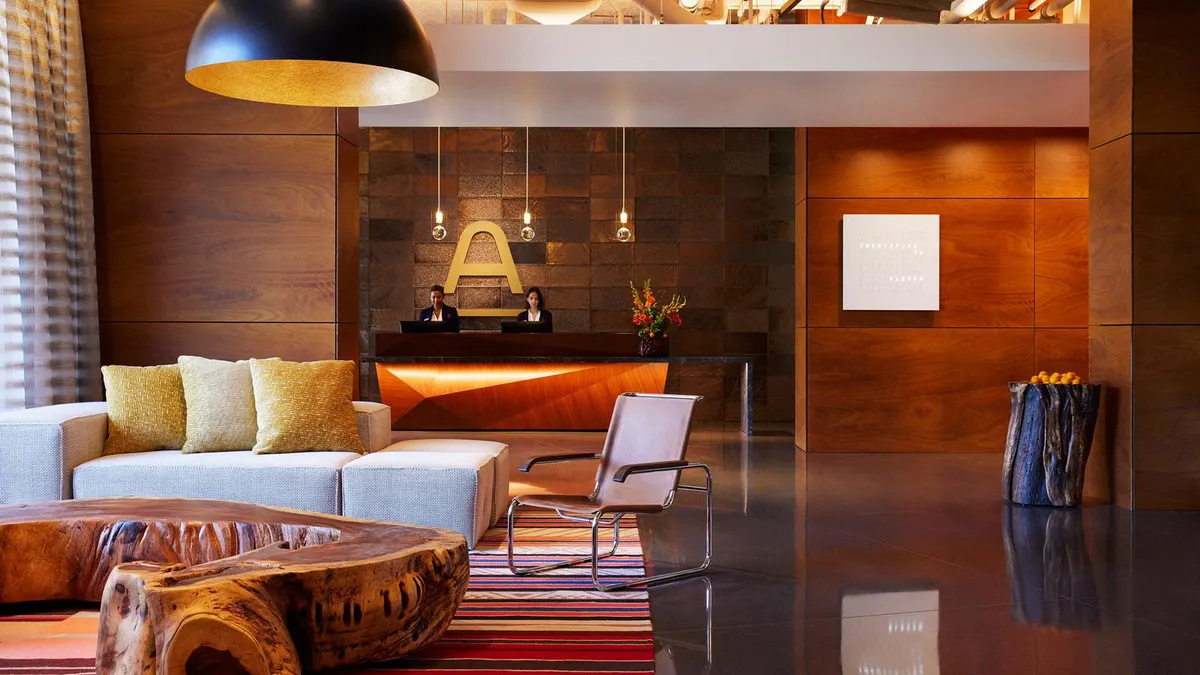
“The spaces you’re creating creates the emotional experience for that guest,” said David Goldstone, president of hospitality at Enseo. “That’s what drives the rate — it’s not how much marble you have in the lobby.”
Another way luxury properties can stand out is through implementing high-quality technology, said Tom Luersen, president of CoralTree Hospitality. Luxury resorts in remote locations, for example, need reliable Wi-Fi, as do areas such as golf courses and parking garages.
“Your [Wi-Fi] works perfectly at home, and it needs to work perfectly in the hotel and when you're on the road,” said David Miller, chief financial officer of Valencia Collection. “I think technology plays an enormous role in that and satisfying the guest.”