

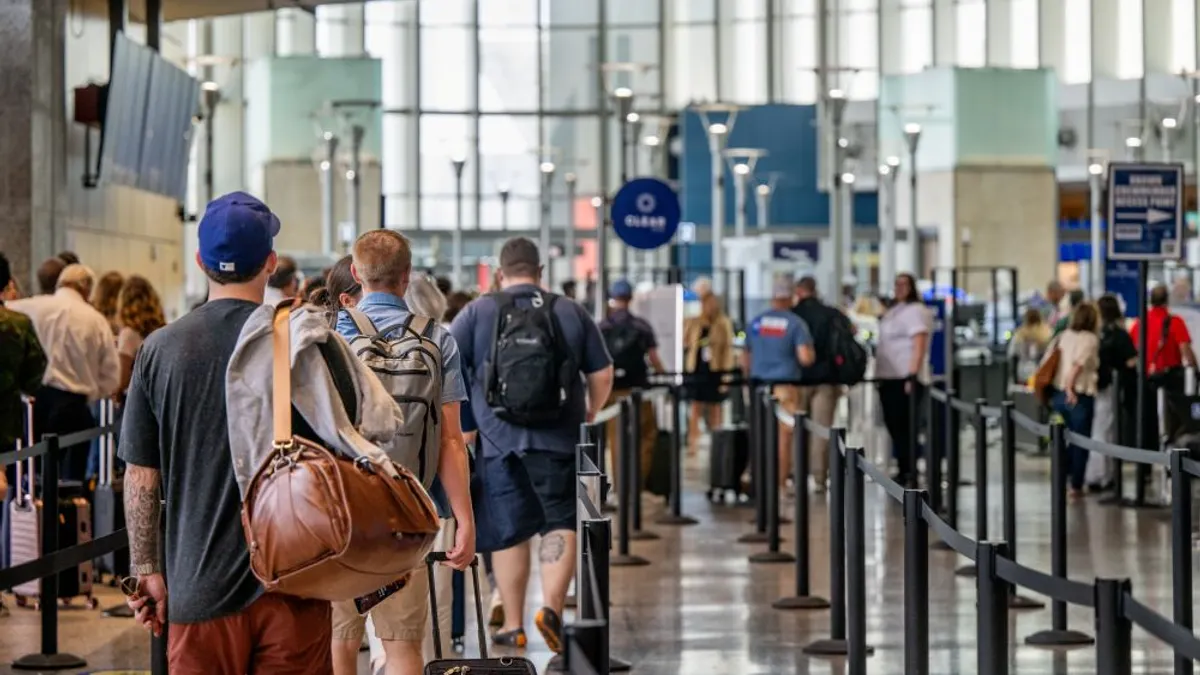
Despite ongoing economic uncertainty and rising costs, consumers are showing a strong urge to travel this summer. Trips may look a little different this season than in years past, though, as budgetary restrictions come into play.
Ahead of Memorial Day, often considered the unofficial kickoff to summer, Hotel Dive analyzed multiple seasonal travel forecasts and spoke with industry experts to determine what trends will drive (or hinder) travel this summer and how they could impact hotels.
Memorial Day travel is an early indicator
AAA projects that 45 million Americans will travel at least 50 miles from home during Memorial Day weekend. The holiday period — this year spanning Thursday, May 21, to Monday, May 25 — has historically shown early indicators for summer travel trends.
“Travel demand remains strong, and despite higher fuel prices, many people are prioritizing leisure travel during holiday breaks,” Stacey Barber, vice president of AAA Travel, said in a statement. AAA’s 2026 Memorial Day weekend projections are roughly flat year over year, though, signaling stagnation in travel demand.
This year, there appears to be a generational divide when it comes to Memorial Day travel. Some 34% of U.S. adults plan to travel over the holiday weekend, expecting to spend an average of $898, according to PwC’s US Consumer Poll on Summer Spending, which surveyed 2,060 adults in April. Of those travelers, though, Gen Z and millennial consumers are far outpacing their older counterparts.
Roughly half of Gen Z consumers (49%) and 43% of millennials plan to take a trip over Memorial Day weekend, compared to 29% of Gen X individuals and 21% of baby boomers, the PwC poll found. Another notable finding is that Memorial Day travelers booked their stays early and plan to take three or more trips this summer, according to PwC.
This comes as 85% of U.S. travelers say they’re “desperate for a vacation,” according to global travel insurance provider Allianz Partners.
Consumers prioritize trips, but cost concerns persist
Allianz Partners surveyed 2,001 Americans between March 20 and April 14 and found that 70% plan to travel this summer — a slightly higher percentage than professional services firm KPMG reported.
Some 60% of respondents to KPMG’s Consumer Pulse Summer 2026 survey, which polled 1,544 U.S. consumers between Feb. 27 and March 18, said they plan to travel this summer.
Meanwhile, Deloitte’s 2026 Summer Travel Survey found that 45% of Americans plan to take a summer vacation with a stay in paid lodging — the lowest figure in six years. Deloitte’s survey fielded responses from 4,003 Americans in April.
While many consumers want to travel, a significant portion (79%) expressed concern about rising travel costs in Allianz Partners’ survey. And Priceline data shared with Hotel Dive shows that 44% of Americans feel summer travel is out of reach due to rising costs this year.
However, consumers will not cut travel entirely this summer, Christina Bennett, consumer travel trends expert at Priceline, told Hotel Dive. Instead, they are being more intentional about their travel choices, “making tradeoffs where it makes sense and finding ways to make their budgets go further,” Bennett said.
This tracks with KPMG research, which found that 38% of consumers are adjusting plans to cheaper alternatives, including shortening vacations, to make them happen this summer.
Meanwhile, Allianz Partners found that 59% of American travelers are cutting back on non-essential expenses in their daily lives to afford summer travel. And PwC reported that Americans plan to spend less on eating out to make this summer’s vacation plans a reality.
More Americans are also expected to stay stateside this year to hedge against rising costs. According to KPMG, 69% of travelers plan to stay in the U.S. this summer, while 21% are planning international vacations, down from 28% in 2025.
How hotels can capture seasonal demand
For the U.S. hotel industry, an increase in domestic travel this summer “is a tailwind that should be really helpful,” Braden Mark, U.S. partner and travel, leisure and hospitality leader at KPMG, told Hotel Dive. Overall, “hotel demand is still really strong,” he said.
According to KPMG research, hotels will remain the most popular accommodation choice among travelers this summer, though their dominance has declined for a fourth straight year. This comes as more lower-income travelers prioritize staying with friends and family and higher-income households show a greater preference for vacation rentals.
Deloitte data shows that the number of Americans planning to stay in hotels at least once during the summer travel season has remained steady year over year (81% in 2026 vs. 80% in 2025), though private rental stays are expected to see a slight uptick this summer (29% vs. 25%).
Another tailwind for hotels, Mark said, is the FIFA World Cup, which will bring tournaments across several domestic host cities in June and July. The event comes as consumers are “being really deliberate about the trips that they take, building those around the experiences that they want to have,” Mark said.
PwC found that 11% of Americans plan to attend a World Cup game in person this summer, spending an average of $379 on tickets, plus $328 on travel costs, and $311 on hotels.
Earlier this month, it was reported that hotel bookings for the event are currently tracking significantly below initial expectations.
Beyond soccer matches, travelers are expected to allot budget increases toward enhanced trip experiences this summer, including more luxurious lodging, according to Deloitte.
“Amid pricing pressures, those who are packing their bags this summer intend to spend, indicating that many are putting a premium on experiences,” Kate Ferrara, vice chair and U.S. transportation, hospitality and services sector leader at Deloitte, said in a statement. “Providers can capitalize on this opportunity by focusing on enhancing the travel experience through upgrades and partner offerings. Those who are traveling have already decided it’s worth the investment, so leaning into the emotional connection to enhance vacation’s value could be a differentiator this summer.”
Priceline’s Bennett echoed a similar sentiment, stating that consumers “want their trips to feel worth it,” so they are “prioritizing experiences that deliver a strong emotional return.”
AI shifts travel search and booking behavior
To optimize experience-based trips this summer, consumers are embracing new tools, including generative AI for trip planning, according to KPMG.
Artificial intelligence “is certainly starting to play a meaningful role in how people plan their trips,” Mark said, adding that KPMG has found that roughly 27% of consumers are already using AI during the discovery or search phase, meaning that consumers are increasingly using AI to narrow their decision-making around booking.
PwC found a similar trend, with some 44% of respondents saying they often or always use AI tools to compare travel prices and look for discounts, while 42% use them to research destinations and travel options, and 33% use AI agents or bots to book parts of their trips.
“For all participants in the travel industry, making sure your brand or your specific hotel is showing up in the way that you want it to during the discovery phase is the most important thing to focus on right now as it relates to AI,” Mark said.
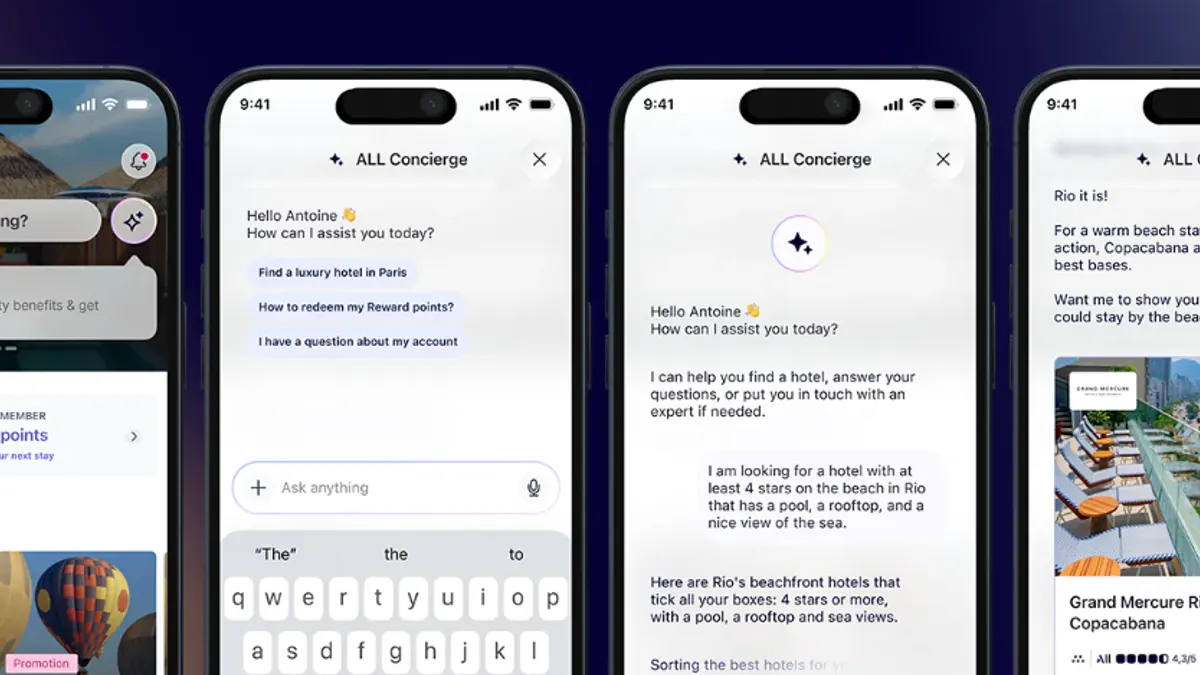
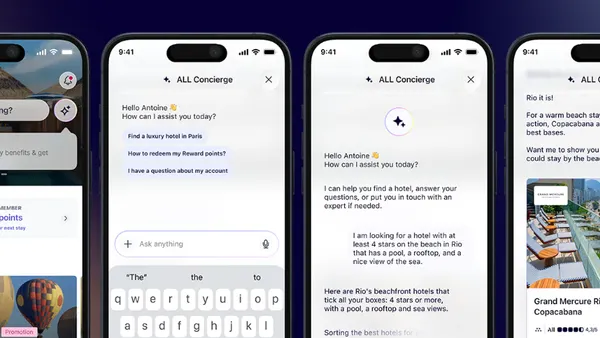
Hotel companies including Hilton, Wyndham Hotels & Resorts, Marriott International and IHG Hotels & Resorts have all recently launched or are currently working on their own AI-powered conversational search tools to assist with travel planning and booking.