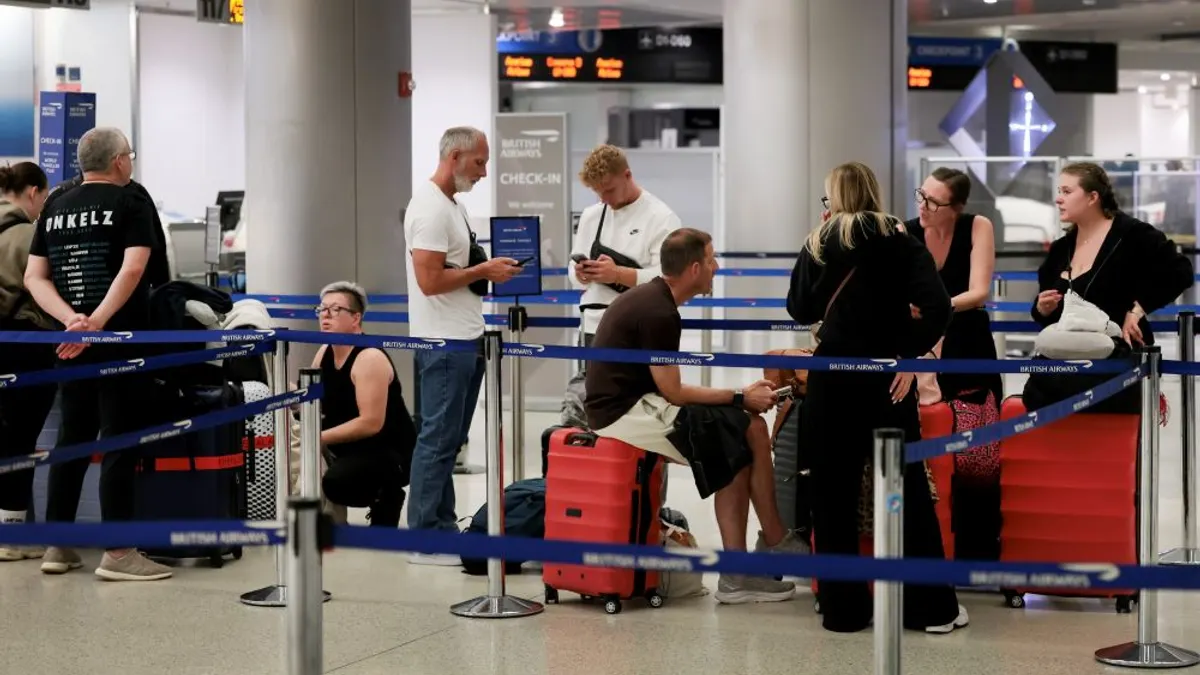
Less than half of Americans are planning trips this holiday season as rising costs impact every age group and income level, according to Deloitte’s 2026 Holiday Travel Survey.
Intent to travel has hit a post-pandemic low, according to the report, which found that only 47% of respondents are planning trips between Thanksgiving and mid-January, down 7 percentage points year over year. In addition, just 27% are planning to take full vacations with paid lodging, representing a 5 percentage point drop over last year’s numbers.
Two in three Americans (65%) said they plan to stay in paid lodging, including hotels or rentals, over the Thanksgiving holiday, and 70% said they plan to stay at paid lodging during the period between Christmas and New Year’s Eve. However, for both Thanksgiving (54%) and Christmas (53%), more than half of all trips will involve staying with family or friends.
The survey polled 4,272 Americans between Sept. 28 and Oct. 2. Of these, 2,019 respondents who are planning to travel between Thanksgiving and mid-January qualified as “holiday travelers,” per Deloitte.
Kate Ferrara, vice chair and U.S. transportation, hospitality and services sector leader at Deloitte, shared with Hotel Dive that however Americans travel, most are still excited to take seasonal vacations this year.
Shifting travel intent
“The holidays are a time of connection and celebration — and we saw that in the data,” Ferrara said in an email statement. “Connecting with loved ones is the leading reported value of holiday travel across generations.” Other motivations vary — for instance, respondents from younger generations “place relatively more emphasis on health and wellness, discovery, and personal identity when asked what makes their holiday trips valuable,” said Ferrara, who was one of the report’s co-authors.
Ferrara added that 20% of Americans are planning to travel this holiday season only to see friends or relatives, down from 22% last year. Yet she also said 58% of the people who plan to travel expect to take more trips, compared to 54% last year. Another 23% “expect to spend significantly more on their longest trip, up from 19%,” Ferrara said.
“Among those who are traveling, the plans are active,” Ferrara said.
Travelers expected to take an average of two trips this season, up from 1.8 last year, she said. For their longest trip, their average budget is $2,792, including transportation and lodging, up 5% YOY, she said.
“The holidays are a time of connection and celebration — and we saw that in the data. Connecting with loved ones is the leading reported value of holiday travel across generations."

Kate Ferrara
Deloitte's vice chair and U.S. transportation, hospitality and services sector leader
The holiday travel season is expected to be one of the busiest travel periods of the year. According to AAA, a record 81.8 million Americans were expected to travel for Thanksgiving last year, and this year’s numbers are only slightly down from that, at 81.5 million.
Deloitte forecast that Thanksgiving would see the most travel and account for 31% of all holiday trips this year, with 54% of those trips lasting three nights or less. The period between Christmas and New Year's Eve will see 28% of all holiday travel, with 40% of those trips expected to last between four to six nights.
However, increasing macroeconomic pressures have created new challenges even for the most well-heeled travelers.
High earners slow down
This is the first time since the post-COVID-19 recovery began that Deloitte has seen travel frequency drop among Americans earning $200,000 and more, per the report. Only 59% of these higher-income travelers said they planned to take trips over the holidays, down from 71% in 2025. One in four high earners who plan to stay home this year said it’s due to travel prices, and another 34% said they plan to take trips after the holidays.
A quarter of high-income travelers said they’re increasing budgets this year, up from 22% last year, although fewer have plans to upgrade their lodging or extend their trips, per Deloitte. In addition, 14% of travelers overall who are increasing their budgets said they are not upgrading but rather travel “simply costs more” this year.
Seventeen percent of travelers are downgrading their trips to save money by taking shorter vacations, planning to spend less when they arrive or opting for budget lodging, per the survey.
Guests prioritize value and service
Meanwhile, lodging intent is up for all accommodation types, and 41% of travelers on longer trips say they plan to book full-service hotels, up 1 percentage point YOY, Ferrara said. She added that full-service hotels are the most popular lodging choice followed by limited-service hotels (18%), private rentals (16%), destination resorts (14%), guesthouses or B&Bs (11%) and cruise ships (8%).
“Price remains the leading factor in choosing lodging, with 57% naming it a top-three criterion, more than twice as often as any other attribute."
Kate Ferrara
Deloitte's vice chair and U.S. transportation, hospitality and services sector leader
Nevertheless, customers are watching their wallets.
“Price remains the leading factor in choosing lodging, with 57% naming it a top-three criterion, more than twice as often as any other attribute,” Ferrara said.
Customer service is the second most important factor, and higher-income travelers, in particular, ranked loyalty memberships and location highly. Across all travelers who plan to upgrade, extending their trip was the most popular splurge (39%), followed by better-located lodging (36%) and in-destination spending (31%).
“We also asked members how well they believe their [loyalty] programs deliver,” Ferrara said. “Among the highest-tier hotel members, more than 70% say their programs meet expectations on flexibility, check-in, redeeming for stays, and room selection and upgrades. Issue resolution and non-hotel rewards scored lowest.”
Generational divides
Technology continues to reshape booking behavior. The report found that generative artificial intelligence adoption is slowing down across all demographics. Yet baby boomers are using Gen AI in increasing numbers, especially when it comes to finding lodging and local attractions. Budget-conscious travelers prefer booking channels that allow them to compare prices from multiple brands in one place, and this kind of tool is especially popular with travelers seeking price-friendly lodging.
Meanwhile, millennials have decreased their holiday travel and paid lodging intent significantly year over year, representing the largest generational drop. And while Gen Z plans to travel less over the holidays, they report budgeting more and feeling more financially optimistic compared to older travelers, the survey found.