


Marriott International is in the midst of a multiyear technology transformation that the company is approaching with both “ambition and caution,” Global Chief Information Officer Naveen Manga shared during a virtual event hosted by Hotel Dive sister publication CIO Dive earlier this month.
Speaking about Marriott’s artificial intelligence deployment strategy, Manga explained that 2025 was a year of experimentation, learning and piloting for the company, whereas “2026 is a year for scale.”
Marriott is focused on building out a “horizontal protocol and model-agnostic AI chassis” that will act as the foundation to power its artificial intelligence use cases across three customer personas: the guest, the associate and the owner, Manga said.
During the virtual event, he shared how the company is taking “a very disciplined approach” to its technology strategy to unlock value for these groups.
Abandoning the old
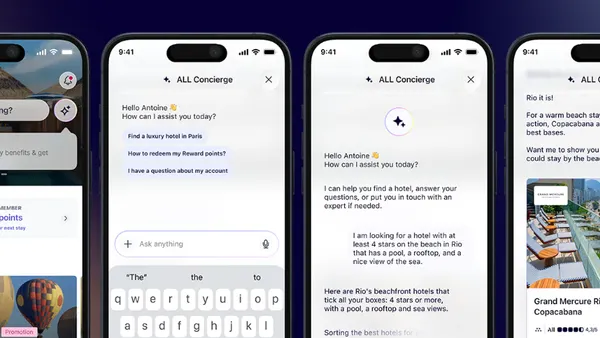
To enhance the guest experience, Marriott is moving toward a conversational, natural language search paradigm, “abandoning the old, traditional destination-based search,” Manga said.
Marriott CEO Anthony Capuano also highlighted this shift during the company’s Q1 2026 earnings call earlier this month, announcing a phased rollout of a “robust natural language search experience” on Marriott’s website and app that will start this quarter.
According to Manga, the Marriott customer journey looks something like this: Guests dream, shop, book, stay, and then post about their experience. Marriott’s new natural language search tool will ease the entire process for guests, allowing them to have a more personalized and thoughtful experience, Manga noted.
Marriott guests will be able to search for a hotel using complex queries — such as asking for a hotel in Venice Beach, California, near the ocean or close to a walking trail and with connecting rooms to accommodate a family, Manga provided as an example. Through a continued “conversation” with the AI tool, guests will be able to pinpoint exactly the type of hotel they are looking for based on their specific requests. Additionally, the context of the conversation will be retained to help with guests’ future searches.
Marriott plans not to expose personal data to a model outside of its enterprise, Manga said, “so there’s guardrails built into the safety and security of that conversation.”
The enhanced search experience debuts as AI “presents an exciting opportunity to connect directly and in a more personalized manner with our customers,” Capuano said during the earnings call.
Automation incoming
Marriott’s ongoing technology transformation is also meant to “enhance owner returns, while positioning our hotel associates to focus more time on quality of service to deliver on customer expectations,” Capuano said.
At the associate level, Marriott is focusing on the software development life cycle, employing AI for its engineering teams, according to Manga. The company is also evaluating tools that will help front desk associates serve guests better, he said.
“Today, [front desk] associates have to go through multiple systems in multiple databases in order to complete their day tasks,” Manga said, however “a lot of automation coming into play” will assist this group.
For Marriott owners, the company is building platforms that will provide streamlined insights into hotel operations, so “they can run the hotel in a much faster and easier way,” Manga said.
All in all, Marriott is “going to use AI in the moments that matter the most for our business,” Manga said, noting that the company is “not splintering our efforts,” but rather bringing them “together into this portfolio approach of value, creation and delivery across the three customer personas of our guests, our associates and our owners.”
Marriott competitors advancing their AI capabilities include Hilton and Wyndham Hotels & Resorts, which both launched conversational search tools in recent months; as well as Choice Hotels International, which partnered with AWS last month on an enterprisewide AI deployment.