

PHOENIX — Faced with rising costs and other operational challenges, hoteliers are evaluating different ways to drive returns at their properties.
Soft-branded hotels — independent properties that partner with major hotel groups while keeping their name and characteristics — are one way owners can think about boosting performance. A slew of soft brands have launched in recent years, including Dazzler Select by Wyndham from Wyndham Hotels & Resorts; Outset Collection by Hilton from Hilton; and Series by Marriott from Marriott International.
Soft brands offer owners access to a hotel company’s distribution network along with brand affiliation that can help drive rates. However, some independent hotels struggle with the decision to convert over concerns that their property will lose the individuality guests have come to appreciate. Owners may also have concerns about costly franchise fees associated with the brand and potentially extensive renovations, which take time and resources.
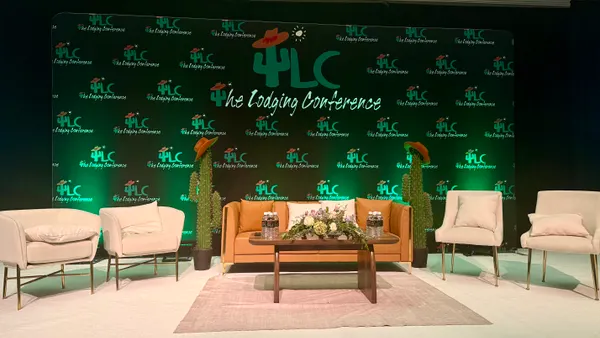
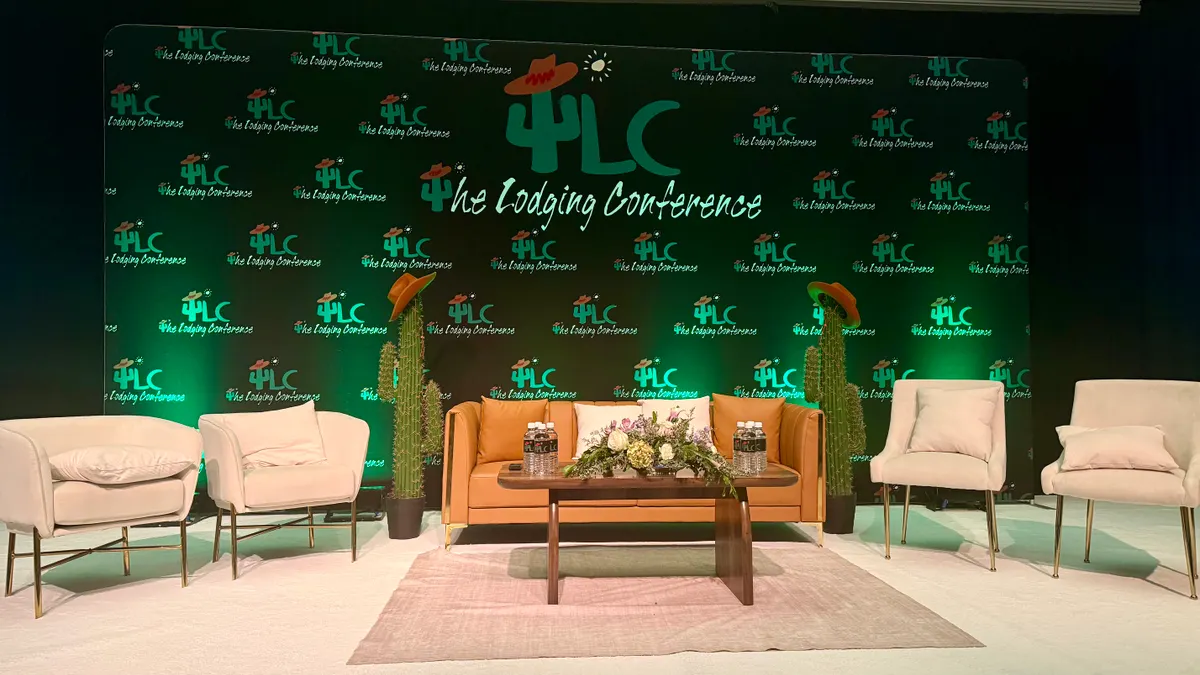
During a panel at this year’s Lodging Conference in Phoenix, hotel owners and brand executives discussed what factors independent hoteliers should consider to determine if a soft brand is right for them and how they can maintain their personality through authentic and unique offerings.
What owners should consider
When considering a soft brand, hoteliers should evaluate what support the brand might give them and how it can help them gain a competitive advantage, according to Kimberly Christner, president and CEO of Cornerstone Hospitality.
“Soft branding isn’t really so soft sometimes,” Christner said during the panel.
“I think you really have to know what you want and what your expectation is on the deliverable, and how much data you want to have [when considering a partnership],” Christner said.
Owners should also consider whether they get a say over branding and other design elements, Christner said, as some brands can be more restrictive than others.
Further, owners should weigh if the brand will actually help the hotel drive returns and capture more guests.
“Is [the soft brand] going to make a difference on your bottom line?” Christner said. “Is that really going to drive traffic to [the hotelier] that you couldn't already get? I think that's an important measure for an owner to consider.”
“We're not talking about the same operators of 20 years ago; utilizing technology is important.”

Kamalesh Patel
Former Chairman of the Asian American Hotel Owners Association
Recently, Cornerstone Hospitality converted the Craddock Terry Hotel, an independent luxury hotel in Lynchburg, Virginia, into a Tribute Portfolio hotel under Marriott, Christner said.
“The reason we converted was because a [Curio Collection by Hilton] property came to the market,” she said. “We had some other competition in the market, and we were losing market share as a result.”
After the nearby Curio opened, Christner conducted a deep dive on the hotel market to see if converting the Craddock Terry Hotel would make a difference to the company’s bottom line. Ultimately, converting into a Tribute allowed the hotel to increase its rate by $50 on an average night, and “we get to still be uniquely ourselves,” Christner said.
Other considerations
A brand’s technology stack is another important consideration for an independent hotel owner, who often doesn’t have the same level of access as major brands, said Kamalesh Patel, hotelier and former chairman of the Asian American Hotel Owners Association.
Patel said that AAHOA partnered with hospitality software platform Mews earlier this year, which has helped his hotels remind guests of add-ons, such as early check-in, that drive ancillary revenue. For independent owners, partnering with a hotel brand that uses proprietary or third-party software like Mews gives them access to such services.
“Soft branding isn’t really so soft sometimes.”
Kimberly Christner
President and CEO of Cornerstone Hospitality
“One of the reasons we did that is because [Mews] gave us the technology platform we need to be able to elevate and be successful,” he said. “We're not talking about the same operators of 20 years ago; utilizing technology is important.”
Ron Pohl, president of international operations at BWH Hotels and president of its WorldHotels brand, said it’s also important to “align on expectations.”
As a major brand, Pohl said he works with owners to see how BWH can drive incremental revenue and profitability to the hotel, as well as cut costs “out of the middle for them.” He noted that participating in a brand’s loyalty program can also help “drive results.”
How to make independent hotels stand out
As the lifestyle and boutique hospitality landscape gets increasingly crowded, owners of soft-branded properties are looking for ways to stand out.
Guy Cook, vice president of luxury and lifestyle development for the U.S. East region at Hyatt, said the “right” soft brand should help the hotel’s distribution while keeping the property’s personality intact.
Cook added that, ultimately, “having a great story” can differentiate a hotel, whether by working with the property’s architecture or highlighting its history.
“...the story of the hotel has to be and should be front and center.”
Guy Cook
Vice President of Luxury and Lifestyle Development for the U.S. East region at Hyatt
“I think bringing in the right branding firm is critically important,” he said. “Telling an authentic story and then ultimately, in our case, picking a brand. We think that drives a lot of value, but I think you have to tell the right story.”
“On all of our stuff, Hyatt should be in the background for our soft brands,” Cook said. “We should help drive direct business. We should reduce OTA commissions, but the story of the hotel has to be and should be front and center.”
The curated retail program at Hyatt’s Bunkhouse and JdV properties has also been “pretty successful,” he said. These shops offer products made by local makers and offer guests a unique experience that can bring in up to $20,000 a month.
“If it's done the right way and it's very authentic, and you're working with local artisans and you're changing out your retail over time, it can be a really effective way to drive revenue,” Cook said.
Meanwhile, Patel said he eliminated breakfast at his properties, allowing F&B to be an ancillary source of revenue. Instead, he has invested in a curated wine program, which allows hotel guests to appreciate local wineries.
“We let the wineries tell their story, and then ultimately the wineries are able to sell alcohol and sell wine tours as well,” he said. “So it's a very symbiotic relationship.”
BWH Hotels’ Pohl added that whatever an independent hotel decides to do, it’s crucial to “do it well.” A bad guest experience can taint a hotel’s reputation and impact business.
“Just do it well,” he said. “Customers will see that, they'll share that, and there's nothing better than a good story coming out about your property that encourages and excites those future guests.”