

It’s been more than three months since Undergraduate by Hilton launched, and momentum for the upper midscale college town-focused brand continues to grow, with a new prototype underway and developers showing interest.
That’s according to Jenna Hackett, Hilton’s senior vice president and global leader of lifestyle brand management, who helped launch Undergraduate. The brand — intended as “off campus social hubs” and an “accessible complement” to Hilton’s Graduate — provides owners and developers with a more flexible and scalable model via new-build and conversion offerings.
When Undergraduate was announced in June, Hilton leaders, including CEO Chris Nassetta, voiced their confidence in the growth prospects of the brand, which according to Hackett intends on reaching more than 500 open hotels over the next 10 to 15 years.
Hotel Dive spoke with Hackett to learn more about the development opportunities with Undergraduate, how they compare with Graduate and Hilton's dual-brand college town ambitions.
The Undergraduate opportunity
Currently, Hilton has Undergraduate hotels in “various stages of development,” Hackett said. However, the location of its first property, expected to open in 2027, has not yet been announced.
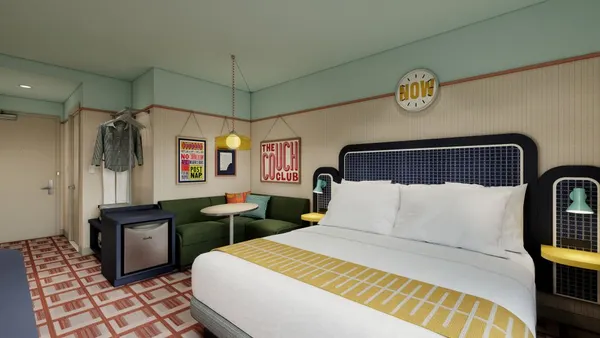
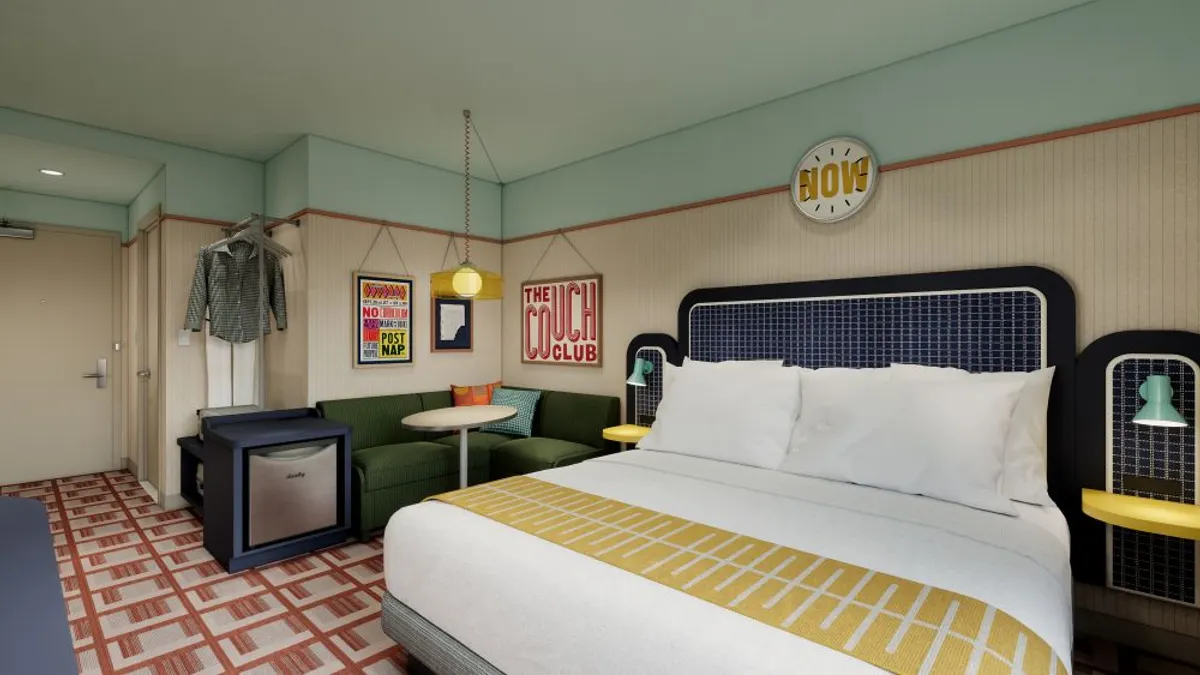
Undergraduate presents a “great opportunity to scale,” according to Hackett. To that end, Hilton is introducing a new-build prototype for Undergraduate, though the brand also supports conversions. While the mix of new-builds and conversions will vary by market, early development conversations are “evenly split” across both models.
For owners and alumni who already have assets in college markets, specifically, Undergraduate presents interesting conversion opportunities, she said.
Comparatively, Graduate fulfills a storied, “high-end and hyper-local” niche, while Undergraduate has a more flexible development model and simplified operating platform, according to Hackett.
Hilton acquired Graduate Hotels in 2024 from AJ Capital Partners for $210 million. Soon after, the idea for Undergraduate kickstarted when Nassetta noticed a lack of lodging options in smaller college towns while visiting his daughter at Bucknell University in Lewisburg, Pennsylvania.
According to Hackett, when considering Graduate and Undergraduate development, Hilton takes into account school size, location and demand dynamics to determine the right brand and guest experience for each market.
“Undergraduate really gives us this opportunity to make a much more scalable approach to these university markets and the ability to have a more prototypical opportunity, but you can still have touches that speak to the university,” Hackett said.
Dual-brand competitive advantage
Having both brands in its portfolio presents Hilton with a competitive advantage in the growing college town hospitality space, Hackett said, who noted she hasn’t seen other prototypical models like Undergraduate’s made for scale in the marketplace yet.
Undergraduate’s new-build prototype and conversion model grants hotel owners creativity to play in the space through whatever touches they seek to implement, such as incorporating a university’s colors or hanging up other college memorabilia.
Compared to Graduate, the brand also offers fewer amenities and costs less to build, which could appeal to developers or owners looking to expand their portfolios on a tighter budget. “For whatever reason,” a hotel owner might not want to build a “bespoke, hyper-tailored” experience like Graduate, Hackett said.
For instance, while food and beverage remains an important part of Undergraduate, the model is simpler and easier for owners to adapt. Properties will feature a barista-led, all-day market with grab-and-go offerings and other retail products, as opposed to Graduate hotels, which often include a full-service restaurant.
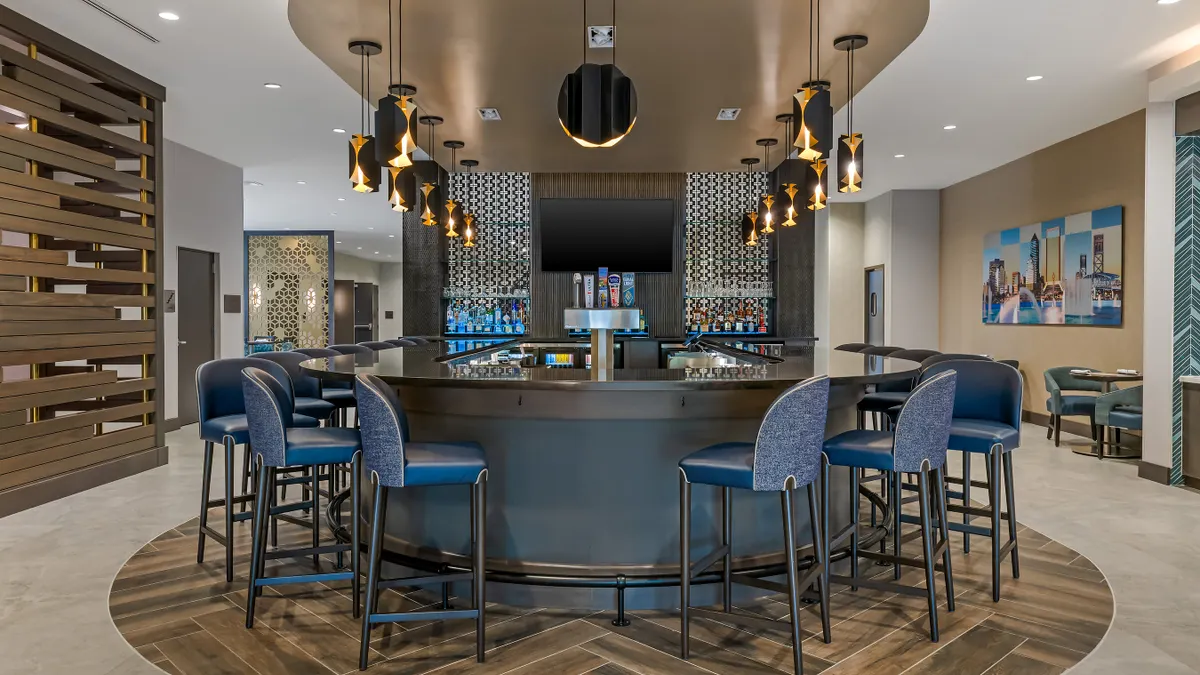
There’s also an option for Undergraduate properties to include an “elevated beverage experience” if they have an existing bar space, Hackett said. Hotel owners will be able to leverage Authentic Hospitality, the group behind Pebble Bar and Ray’s in New York City, to operate their bar.
Undergraduate and Graduate don’t cannibalize one another, Hackett said, noting each brand “can play nicely in the university space, but both of them are distinct.”
Currently, there are 35 Graduate properties open across the U.S. and U.K., with 60 hotels in various stages of development, per Hilton.
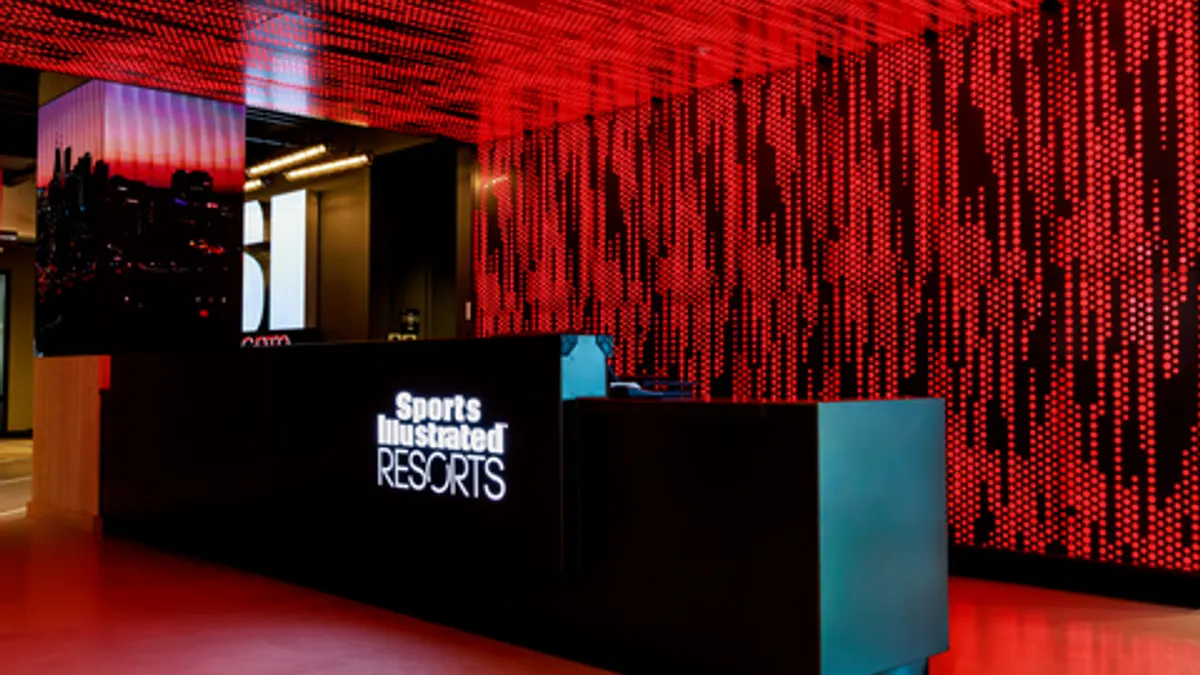
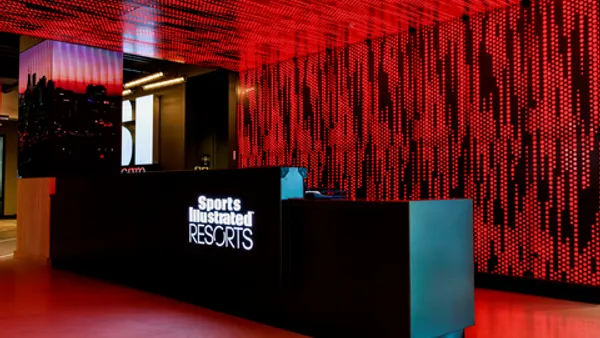
With the goal of playing in the college space, Undergraduate and Graduate sit among other players cropping up in the college town space, such as luxury hospitality concept Alum and Travel + Leisure Co.’s Sports Illustrated Resorts, which partnered with Wyndham Hotels & Resorts this week to scale its hotels portfolio.
Conversion strategy
Both Undergraduate and Graduate are conversion-friendly brands, which comes as conversions continue to drive growth for Hilton.
Undergraduate also joins Hilton’s growing lifestyle portfolio, which include Curio Collection, Tapestry Collection, Outset Collection, and LXR.
In 2025, 40% of Hilton’s openings were conversions, while 60% of collections that opened in 2025 were conversions.
“This year now, over half of our lifestyle openings to date have been conversions,” Hackett said. “I would say there’s a huge opportunity as I think about conversions and the lifestyle space.