

Hotel players are increasingly eyeing college town markets due to their stable demand patterns regardless of fluctuations in the economy.
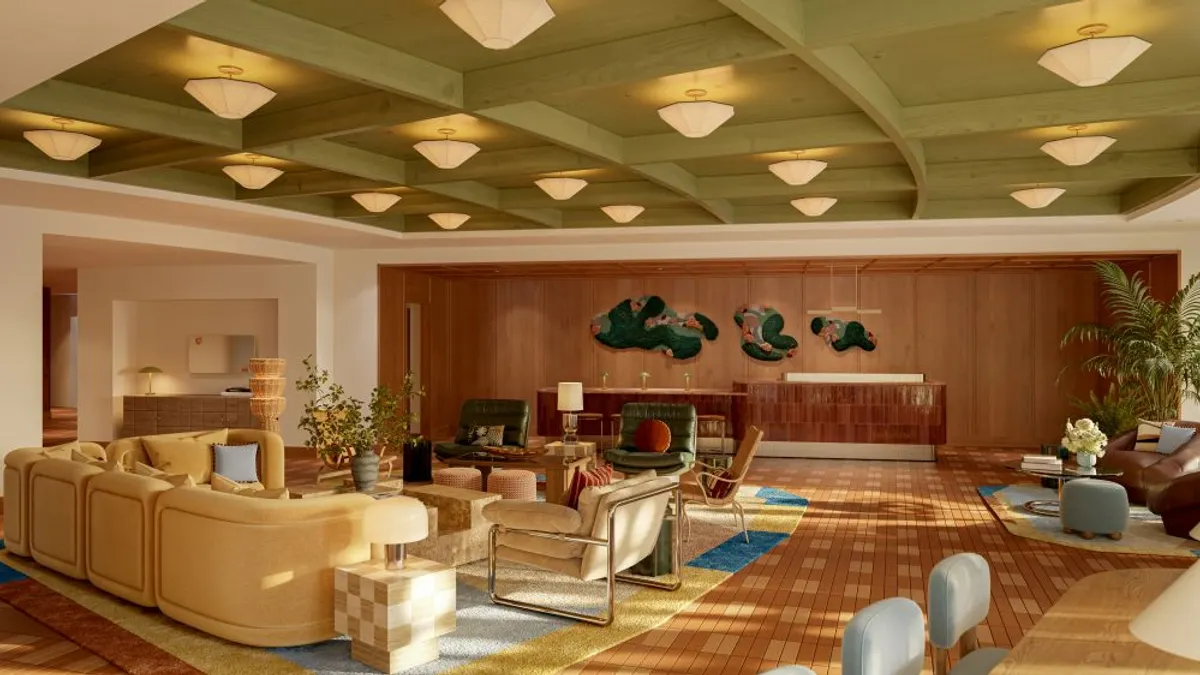
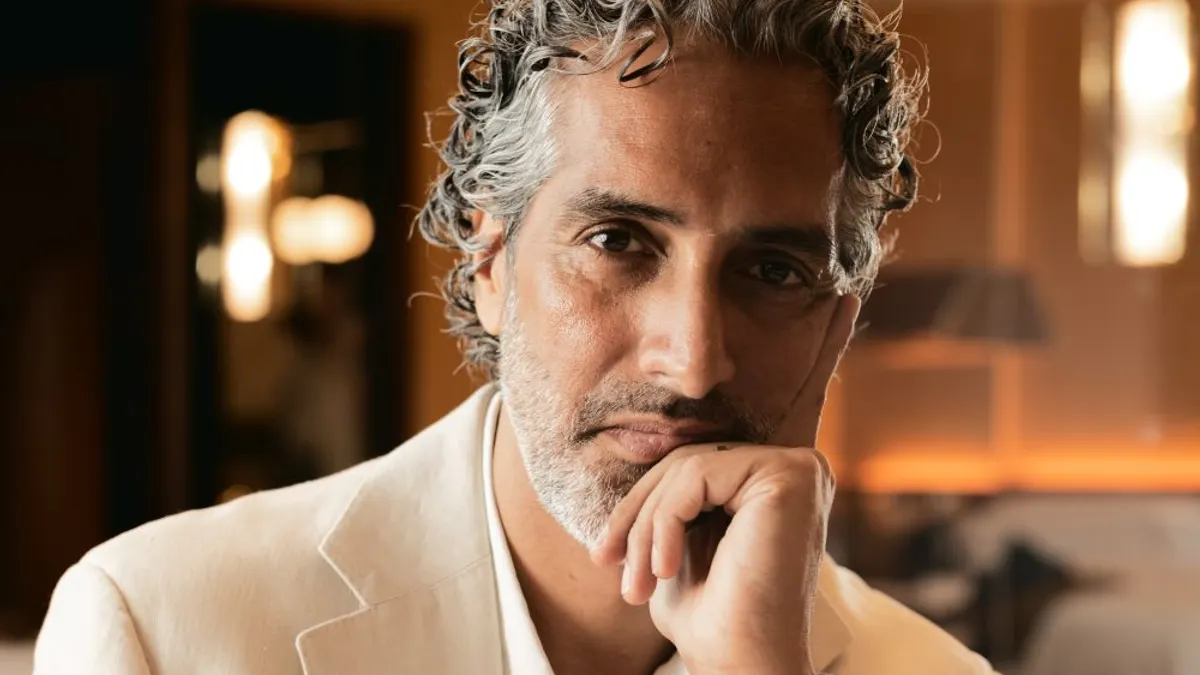
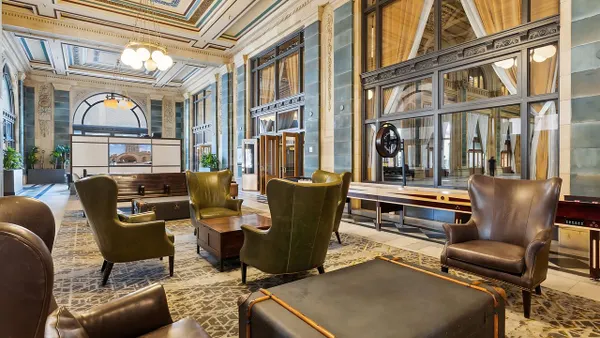
Earlier this month, another hospitality company threw its hat into the ring with the launch of Alum, a new luxury hospitality concept centered on college towns. Backed by Baseball Hall of Famer Derek Jeter, the concept plans to provide an exclusive club and accommodations experience along with year-round programming to alumni, donors, sports fans, out-of-state parents and media personnel.
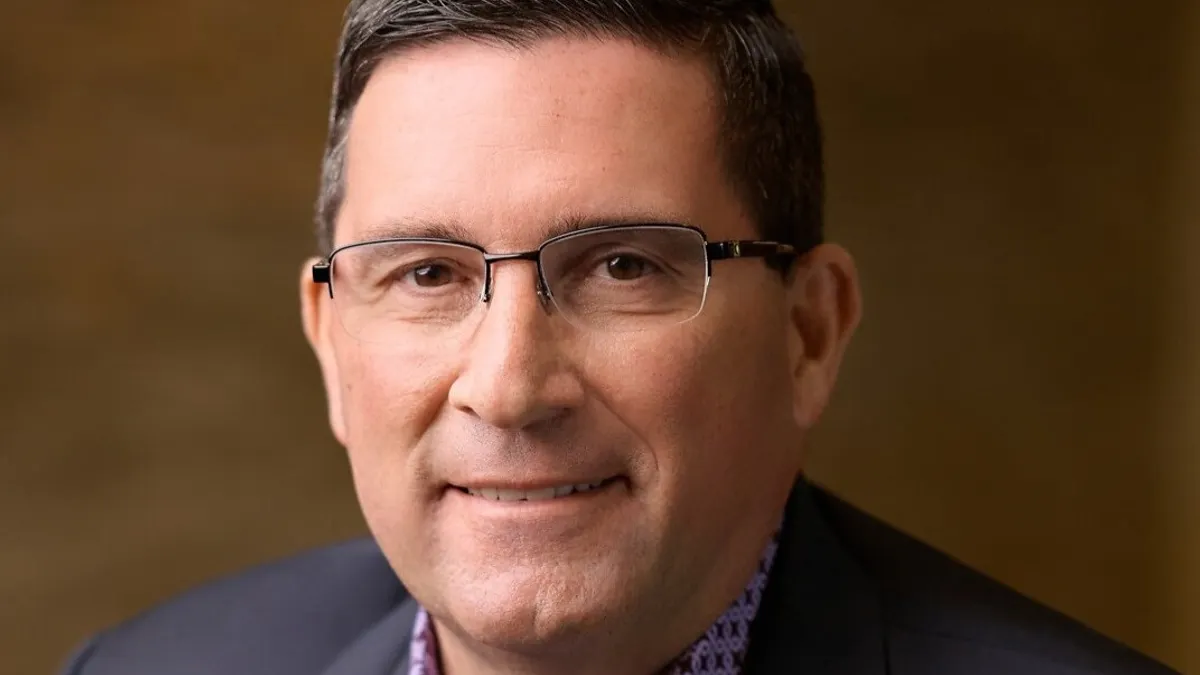
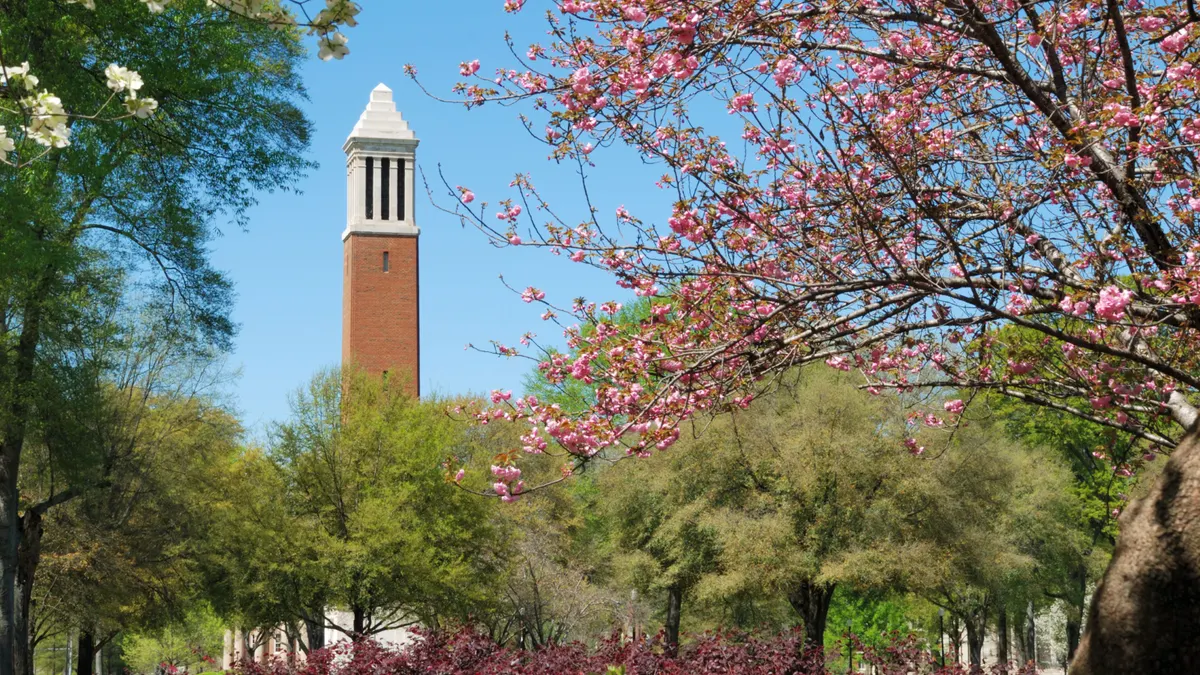
Its first location will open in Tuscaloosa, Alabama, near the University of Alabama, with a groundbreaking scheduled for September, Alum co-founder and CEO David Vialli told Hotel Dive. Alum also doesn’t have a hotel partner and plans to operate as an independent brand, he said.
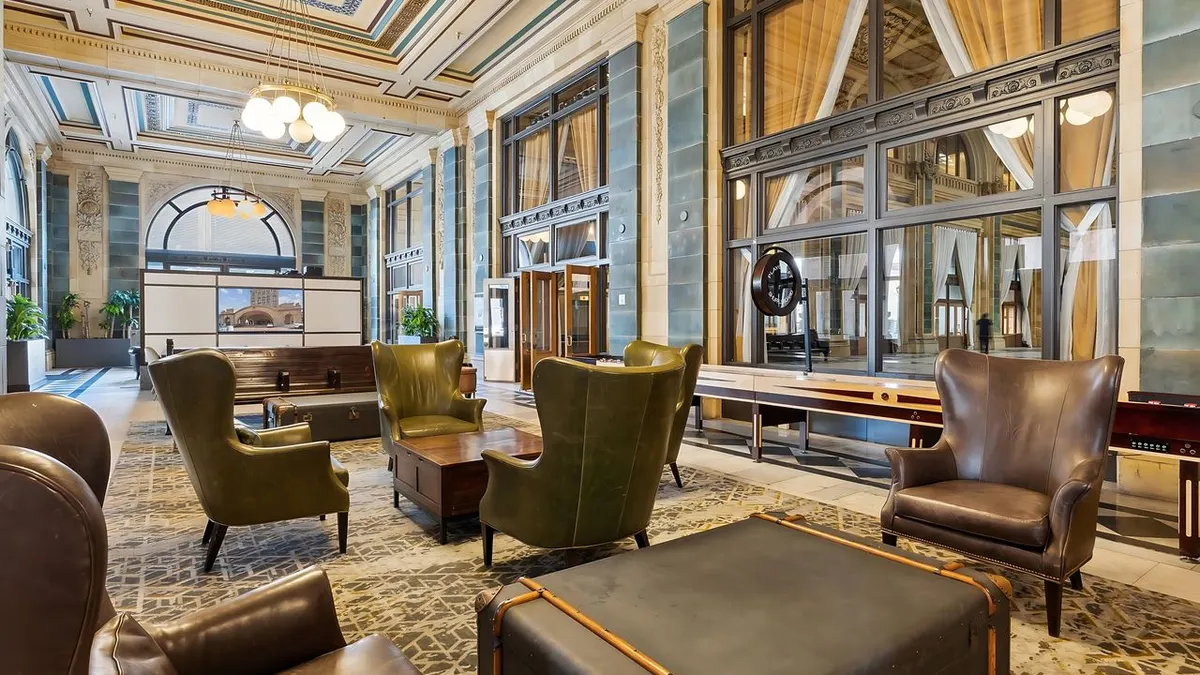
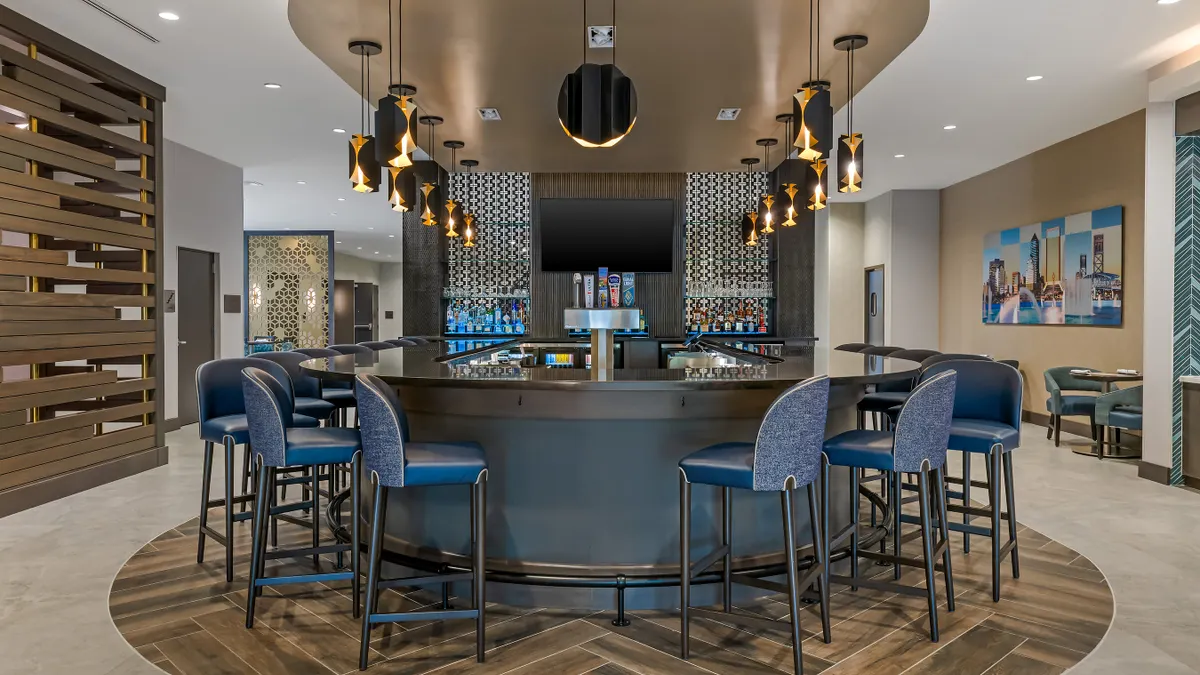
Alum arrives as other hospitality companies such as Hilton and Travel + Leisure Co. expand in college towns. But what makes Alum stand out from the rest are its luxury offerings and year-round social scene that fosters community and collegiate pride.
Vialli spoke with Hotel Dive about what led to Alum’s creation, why more capital is flowing into college markets and its vision of becoming the Soho House for alumni and donors.
This interview has been edited for clarity and brevity.
HOTEL DIVE: What led to the formation of Alum? How did you come up with the concept?
DAVID VIALLI: I come from a 25-year-plus hospitality background. I spent a bunch of years in Standard Hotels and then Hoxton Hotels. When I was working with Hoxton, we had just opened a Hoxton hotel in Portland, and my Alum co-founder Paul [Brenneke] was an investor in one of the food and beverage groups we partnered with there, and we started the idea.
He said: ‘Hey, what would you think about doing condos or condo hotels in college markets?’ He had just put his daughters through the University of Colorado, Boulder. He spent $1,000 a night for a room in a Courtyard by Marriott, and some frat boy threw up on his suede shoes, and he thought, there has got to be a better option than this. That’s really the genesis of this brand.
"From a traditional hotel financing standpoint, it's hard to build a luxury hotel in a college town because you don't have the year-round rate cycle and demand."

David Vialli
Alum co-founder and CEO
Post-COVID, people really put an onus back on in-person experiences and coming back to college campuses and coming back to those environments where you had your best days. Another big trend we’ve seen is that students from traditional, coastal markets are flooding SEC, Big 10 and Midwestern schools. There was an article two years ago about an 84% increase in the last 20 years of kids from the Northeast heading to the SEC. You have alumni that come out of these schools and also out-of-state parents who are coming to spend.
So you've got hotel guests, you've got buyers, you've got club members who want to frequent these collegiate towns more frequently than before — and they are paying luxury hotel prices and getting a three-star experience in each one of these markets. From a traditional hotel financing standpoint, it's hard to build a luxury hotel in a college town because you don't have the year-round rate cycle and demand. You’ve got these big expansive weekends of football games, but traditional financing doesn’t work for these markets.
Whereas our model works well because we pay off the construction loan with the sale of a condo, so we de-risk the entire project. All of a sudden, we have a fully paid-for hotel, condo and members’ club, and then we have a free asset basically on a go-forward basis post-opening.
Why do you think capital is flowing into the college market right now?
College and college athletics have always been a big business, and now it’s gotten even bigger because of two things: the commercialization of the athletes and them being able to be paid. It's actually increased the pie because now every school is competitive in almost all sports because of the ability to raise capital to pay the players.
One of the downstream effects of that now is that every school has to do revenue sharing with their athletes, so they've got to put out about $20 million a year to pay players. Just to go ask donors to contribute more, it’s a big ask. All of these schools are now looking for opportunities to drive more revenue into these markets, and one of the biggest things they’re doing is using their real estate for that, so you’re seeing a rise of collegiate-based entertainment districts.
Who exactly is this new concept meant for?
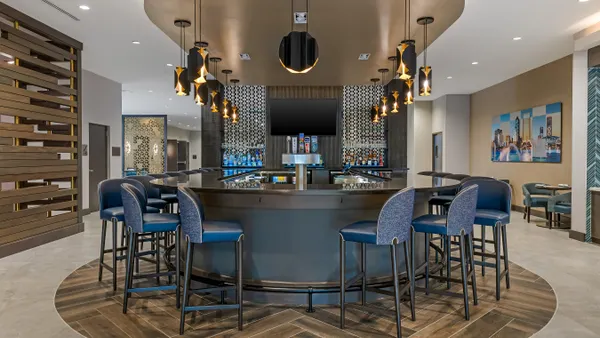
I think the audience is very clear — it’s donors and alumni. They’re looking for a great place to stay and gather when they come into town. Most of these towns have limited lodging options, so they’re looking to secure that and not have to work so hard. The other piece is adding a members’ club to give a place for all of these people to gather.
"The goal for us from a scale standpoint is to build the community. Just like with Soho House, no matter where you go, there’s a place for you to be — it’s the same thing here."
David Vialli
Alum co-founder and CEO
In Alabama, there’s 250,000 people that show up in Tuscaloosa for a game day weekend to tailgate and engage and gather together. Right now, they are settling for mid-tier lodging options. They’ve got the Courtyard by Marriott, the Embassy Suites — and (in some cases) they're paying $2,500 a night for those lodging options. If you're going to pay luxury prices, let's have a luxury hospitality offering for you to be a part of.
So I would say the concept is for donors, out-of-state parents and then athletes and alumni who want to come back for these events, and media folks.
The goal for us from a scale standpoint is to build the community. Just like with Soho House, no matter where you go, there’s a place for you to be — it’s the same thing here. A lot of these folks touch a lot of these markets every year, all year long, and it gives them the infrastructure and a place to gather. Plus, the communities are now so inter-engaged with each other because the schools are playing each other every year. It gives everybody a place to gather when you go visit the opposing town’s team as well.
What will the hotel at Alum Tuscaloosa look like?
It’s 68 condo units, and it can become 104 hotel keys. Because of the mix of units, you’ve got one-bedroom condos, but then you’ve also got two-bedroom condos with a lock-off unit. That two-bedroom can be two rooms, so it could be a standalone hotel room, and it can be its own condo unit.
The condos are like Airbnbs. It has a kitchen and everything you need in there to live. It’s a good long-term stay option for some of these folks.
How are you viewing the competition in space? How do you think Alum stands out?
I would say we see them as creative. It’s great competition. We have the same market thesis, we just provide a different offering. They are kind of on the upper scale. We are a luxury offering. If you look at the Hilton portfolio, it would be like putting a Graduate by Hilton and then putting a Waldorf Astoria next to it — that’s essentially the differentiator. We’re providing a luxury option.
Our properties are going to be a little smaller, a little bit more exclusive; it’s a little bit of a high barrier to entry just because of the purchase price of the condos and also the club membership fees you’re going to pay.
We’re not partnering up on the hotel side. Alum is an independent brand at this point, so we’ve partnered with Legends to run the club from an operator standpoint. But there won’t be a hotel partner as of yet.
What’s next for Alum? After the Alabama property opens, what's the strategy moving forward?
We’re going to make the announcement in the next month on the next location. We’ve got about 15 active deals I’m negotiating right now.
Down the road, we believe the Venn diagram of fandom and sports fandom translates to [professional] sports as well. So we may look at pro sports. We’re talking to a few of the new NFL stadiums, we’re talking about some pro sport opportunities as well.
Every college sports team is enhancing their stadium to do more club suites and VIP suites and everything else. They want to keep adding these upscale experiences across the board. The hospitality offerings need to keep up, and so I think that's the niche we’re filling right now.