

Dive Brief:
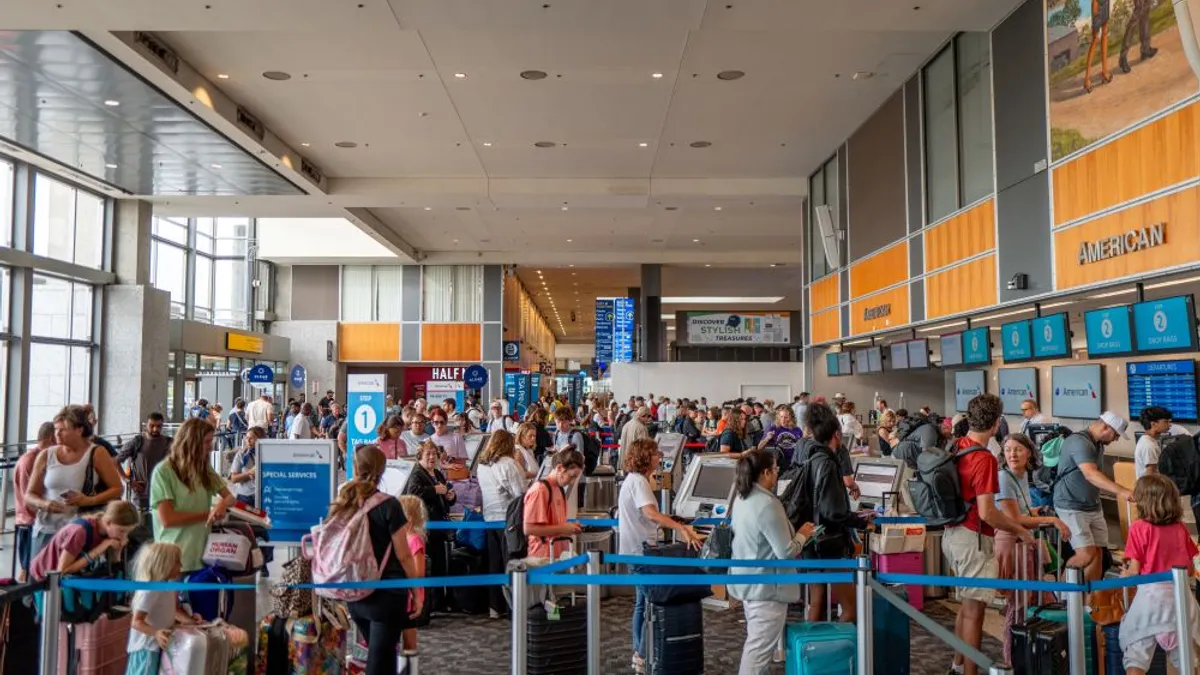
- President Donald Trump signed a bill to fund most of the Department of Homeland Security Thursday, officially ending the longest shutdown of a government agency to date. The 76-day partial shutdown led to disruptions in Transportation Security Administration operations at airports, impacting the greater travel industry.
- Hospitality associations have urged for the end of the partial government shutdown that led to record airport wait times and many flight cancellations and threatened travel to upcoming events such as the FIFA World Cup. The 2025 government shutdown led to millions of dollars in lost hotel business.
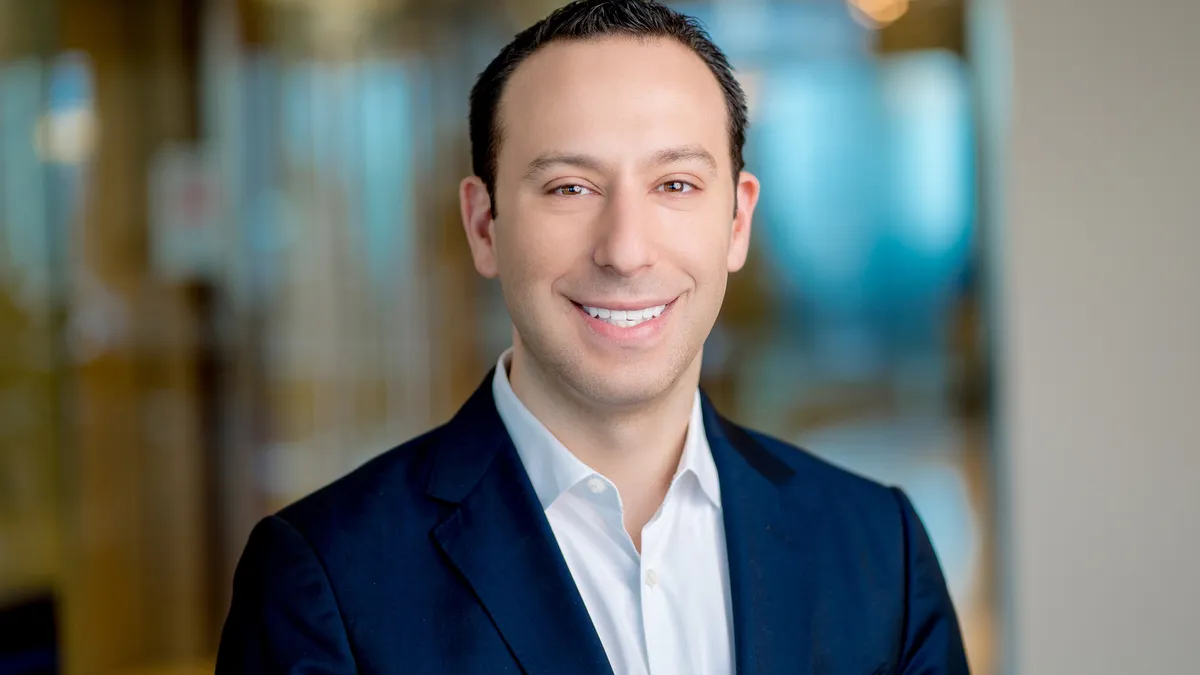
- In a statement Thursday, American Hotel & Lodging Association President and CEO Rosanna Maietta said the “reopening of DHS was long overdue.” The disruption that resulted from the shutdown “didn’t end at the airport,” she continued. “It led to canceled trips and fewer hotel guests, and cut into the livelihoods of the nearly nine million Americans whose jobs depend on a functioning travel economy.”
Dive Insight:
According to Maietta, the government’s decision to reopen DHS “does not erase the unacceptable damage caused by this shutdown.”
“For months, dedicated TSA officers were used as political pawns, forced to work without reliable pay while keeping the nation’s travel system running. That is outrageous, and it left the entire travel industry bearing the consequences,” she said.
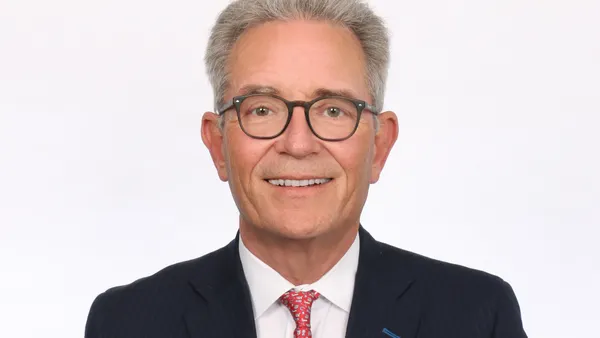
U.S. Travel Association President and CEO Geoff Freeman also weighed in on the bill’s passage in a Thursday statement, noting that while it restores funding certainty for most of the DHS, “there are no real winners in a shutdown.”
“Congress must ensure that TSA officers and air traffic controllers are never again treated as political footballs,” Freeman said.
With the FIFA World Cup just weeks away, the shutdown has also weakened the travel industry’s level of preparedness for the international event, per Freeman.
“Over the past seven months, it has become clear that some in Congress are increasingly willing to use government shutdowns to advance political goals. That approach carries real consequences for our national security and the traveling public,” he said.
For the past year, the federal government has been unfunded or at the risk of a shutdown, “creating instability that undermines consumer confidence and workforce reliability,” per Maietta.
“A functioning government is essential to a strong travel economy,” she said. “Congress must ensure this is the last time this critical industry is treated as collateral damage in a political standoff.”
The reopening also comes as hoteliers anticipate greater traveler demand ahead of the World Cup, which is expected to provide at least a “modest” RevPAR lift. According to CoStar and Tourism Economics, RevPAR is forecast to increase 1.7% year over year during the tournament months.