

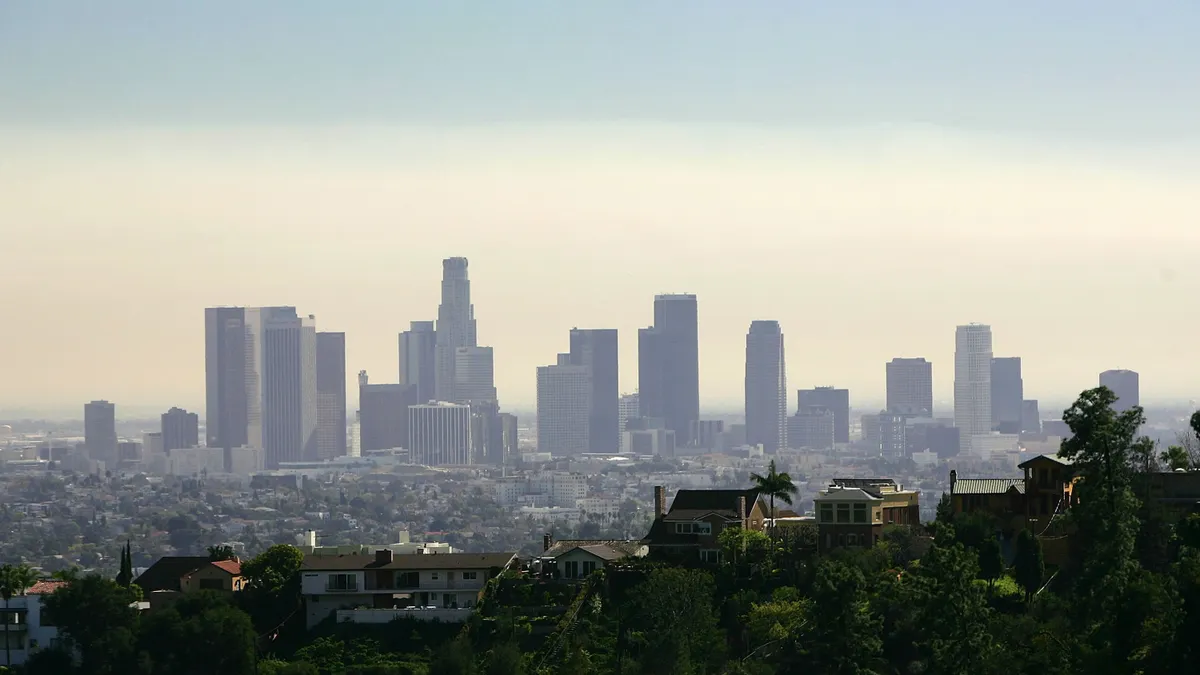
The Los Angeles City Council has made a move to potentially delay the implementation of the Citywide Hotel Worker Minimum Wage Ordinance, which was signed into law last year.
The mandate, sometimes referred to as the “Olympic Wage” ordinance, requires LA hotels to pay workers $25 per hour, effective July 1, with that minimum wage increasing to $27.50 beginning July 1, 2027, and $30 starting July 1, 2028. A new proposal, however, calls for that wage schedule to be delayed, with a plan for the $30 wage to start in 2030, instead of in 2028.
On Wednesday, the City Council voted 9-6 to advance an ordinance that could potentially stall the implementation of the $30 minimum wage. The council’s motion will act as “a placeholder,” said LA City Council President Marqueece Harris-Dawson, allowing city officials, hospitality organizations and labor unions to continue negotiations around the wage mandate in the coming days. Another vote is required to formally delay the mandate’s implementation timeline.
The Citywide Hotel Worker Minimum Wage Ordinance has been hotly debated among industry stakeholders, who claim the mandate is detrimental to local businesses. Local hospitality workers, meanwhile, say the wage increase is needed to keep up with the rising cost of living.
Hotel owners’ associations speak out
The City Council’s Wednesday motion has created “an important opportunity for policymakers and stakeholders to work together toward solutions that protect workers while ensuring hotels can continue operating, investing in their properties, and sustaining local jobs as Los Angeles prepares to welcome the world in 2028,” Laura Lee Blake, president and CEO of the Asian American Hotel Owners Association, said in a Thursday statement.
AAHOA, among other hotel industry stakeholders, is a staunch opponent of the wage ordinance.
“Many hotel owners, particularly small business and family-owned operators, continue to face rising labor costs, increased insurance premiums, higher taxes, and ongoing operational challenges,” AAHOA Chairman Rahul Patel said in a statement. “Delaying implementation provides an opportunity for meaningful discussions that can lead to a more balanced and sustainable solution for workers, hotel owners, and the city.”
The American Hotel & Lodging Association similarly applauded the council’s motion, with a spokesperson telling Hotel Dive the organization is “encouraged that the City Council is taking action to amend this policy and prevent further harm to our local economy and community.”
Last month, AHLA said the mandate, as it stands today, represents “one of the most aggressive wage schedules in the nation,” which will “far exceed inflation, wage growth in comparable markets and the economic capacity of many mid-market and independent properties to absorb.”
“Since this legislation took effect last year, hotels are struggling to meet the rising labor and operating costs combined with decreased demand,” the AHLA spokesperson said. “Los Angeles hotels are struggling to make the math work.”
Nationwide, rising operating costs, including labor, are one of the top concerns of hotel owners in 2026.
Hospitality workers maintain stance
However, hospitality workers in Los Angeles maintain that the incremental wage increases laid out in the current ordinance schedule are necessary for survival. Workers are struggling to afford groceries, gas and healthcare, LA City Council Member Eunisses Hernandez said during the Wednesday meeting.
The Citywide Hotel Worker Minimum Wage Ordinance resulted from years of advocacy by local hospitality workers, who, according to Hernandez, “endured a multimillion-dollar opposition campaign from airlines, hotel corporations and industry groups trying to crush them.”
“Now after all that, we’re supposed to swoop in and water [the ordinance] down. Absolutely not,” she continued. “Workers plan their lives around these wage raises and healthcare subsidies. People budgeted for rent, for groceries, for childcare, for medical appointments, for survival.”
City Council Member Monica Rodriguez argued during the Wednesday meeting that “no one is attempting to prevent an opportunity for people to earn a living wage in this city, but what we have to talk about is the businesses that will cease to exist if we adopt policies without any regard to the implications of those businesses maintaining operations in the city.”
According to AAHOA’s Patel, the association supports fair wages and strong career opportunities for hotel employees, “but policies of this magnitude must reflect the economic realities facing hotel owners.”
AHLA, meanwhile, remains “committed to working with the council on a balanced solution that supports both workers and hotels,” per the spokesperson.
City Council President Harris-Dawson said the council would revisit the discussion surrounding the ordinance on Tuesday.