A hotel can be fully compliant with the Americans with Disabilities Act and still be vulnerable to losing an aging guest — including at the bedroom door, in the bathroom or even on the booking page — accessibility experts say.
“Just because something is ADA-compliant doesn't mean it's easy to use,” Brett Heising, an independent accessibility consultant and wheelchair user, told Hotel Dive.
That gap between the letter of the law and an accessible stay is where many properties fall short, said Andrés Villagrán, head of marketing at Wheel the World, an accessibility-focused travel booking platform. The ADA, he told Hotel Dive, “sets a floor. It tells you the minimum grab bar placement, the minimum door width and the minimum turning radius. It was written as a civil rights standard, not as a hospitality usability standard.”
This accessibility gap is a growing concern. The U.S. population is aging rapidly, with older adults representing a larger share of consumer spending. People ages 65 and older will comprise 23% of the total U.S. population by 2060, up from just 17% in 2020, according to the U.S. Census Bureau. In addition, the number of people 85 and older is expected to nearly triple to 19 million by 2060.
Given these demographic shifts, hotels can no longer afford to treat accessibility as a mere compliance issue. Brands that treat it as such could lose guests to competitors that treat accessibility “as a guest-experience question,” Villagrán said.
“Older customers are the ones who have the cash to spend.”

Shelton Ensley
Accessibility specialist at Studio Pacifica
“Older customers are the ones who have the cash to spend,” said Shelton Ensley, an accessibility specialist at the architectural consultancy Studio Pacifica.
A lack of accessibility can also have long-term effects on loyalty, as older travelers take longer trips, travel in larger groups, spend more and stay with brands that meet their needs, experts say.
Older adults are “very, very loyal consumers,” Heising said.
Beyond the ramp
During the booking process, it’s often difficult or even impossible to know whether a specific hotel or room can meet a guest’s accessibility needs.
“The biggest accessibility barrier most travelers face isn't that the feature doesn't exist. It's that they can't find out whether it exists before they book,” Villagrán said.
But some accessibility challenges go beyond information sharing.
Bed height, for example, is not specifically mandated under the ADA, but it’s often a significant hurdle for many guests, experts say. In recent years, hotels have been installing taller and taller beds — often 30 to 32 inches — because they photograph well.
But that makes it difficult for those with physical limitations to get in and out of bed. A bed height closer to 22 to 23 inches is far more workable for such customers, Villagrán said, citing company data.
“It's one of the most common concerns guests mention in accessible rooms because it directly impacts ease of movement and independence within the space,” Keith Harris, vice president of architecture, design and construction at Wyndham Hotels & Resorts, told Hotel Dive.
“Accessibility is a system. You can't optimize one room and call it done.”
Andrés Villagrán
Head of Marketing at Wheel the World
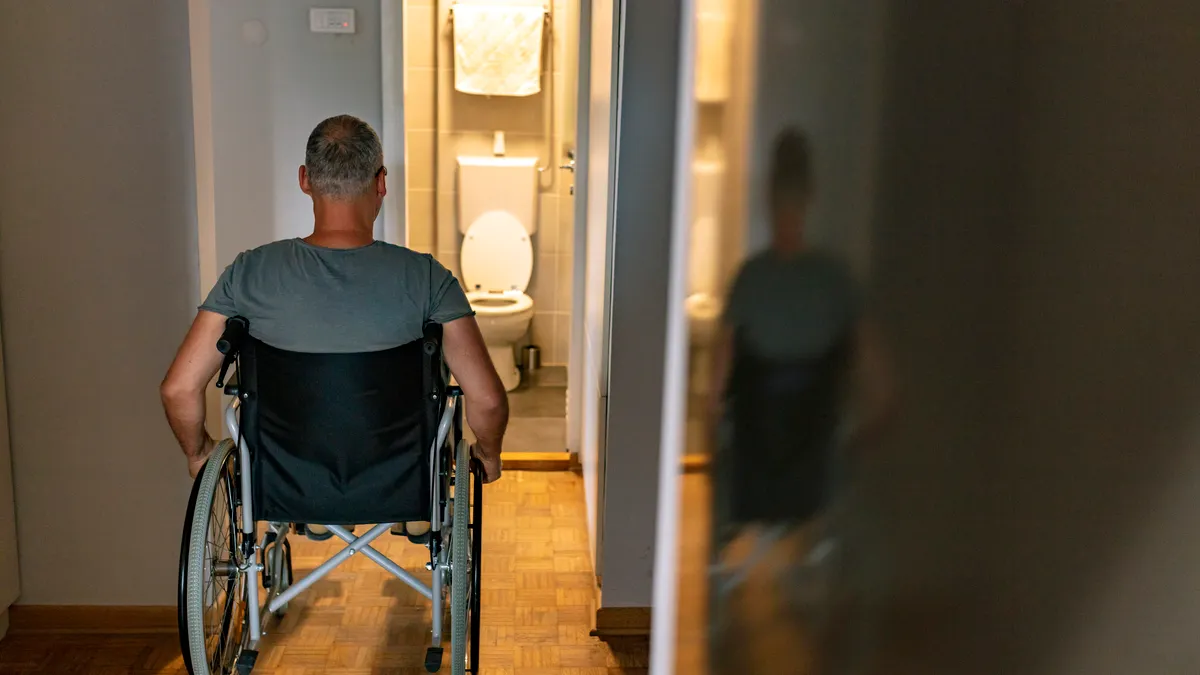
Bathrooms are another trouble area. Bathtubs, for instance, can often strand guests who can no longer step over the edge.
They “are really hard for an aging population,” Ensley said.
But installing a roll-in shower is not enough. Most rooms would serve every guest better if they “had a hand shower, not just a rain shower,” allowing guests to aim the water whether they’re standing or seated, Ensley said.
The deeper issue, however, is focusing solely on the hotel room, as a well-configured, accessible room does nothing to address accessibility issues affecting other parts of the property, such as a restaurant, pool or pathways.
“Accessibility is a system. You can't optimize one room and call it done,” Villagrán said.
Cheap fixes
Improving accessibility at hotels doesn’t have to require significant capital investments, experts say.
Oftentimes, the difference between an accessible hotel and an inaccessible one comes down to whether the staff knows the property.
“Effort doesn't cost any money,” Heising said. “Knowing your property doesn't cost any money.”
Training is critical, too. Staff should never make assumptions based on appearances since a guest who walks in one day may rely on a mobility device the next.
“Not all disabilities are visible,” Ensley said.
In addition, some of the most useful fixes are as simple as the placement of electrical and charging outlets, which are sometimes difficult to reach. Older adults who travel with specialized equipment, such as a Continuous Positive Airway Pressure, or CPAP, machine to treat sleep apnea, may require additional outlets. Ensuring that lighting illuminates every corner of a room and installing basic, plug-in nightlights to help guests navigate unfamiliar areas at night can also make these spaces more livable.
“The best accessibility design … is providing options for people,” Ensley said.
For hoteliers weighing where to start, Harris suggests to “start by listening directly to guests with accessibility needs and using that feedback to make improvements.”
And for those who still need convincing, Heising put it bluntly: “Hotels are sitting on a gold mine. They just have to learn how to market it.