

Hotel Tech-in is our regular feature that takes a closer look at emerging technology in the hospitality industry.
Hotel staff have a multitude of daily tasks to keep operations running smoothly while ensuring guest satisfaction. One of these tasks is picking up room-service trays left out in the halls.
However, retrieving these trays from hallways and out of guests' way in a timely manner can prove challenging, as staff typically have to manually track down their location.
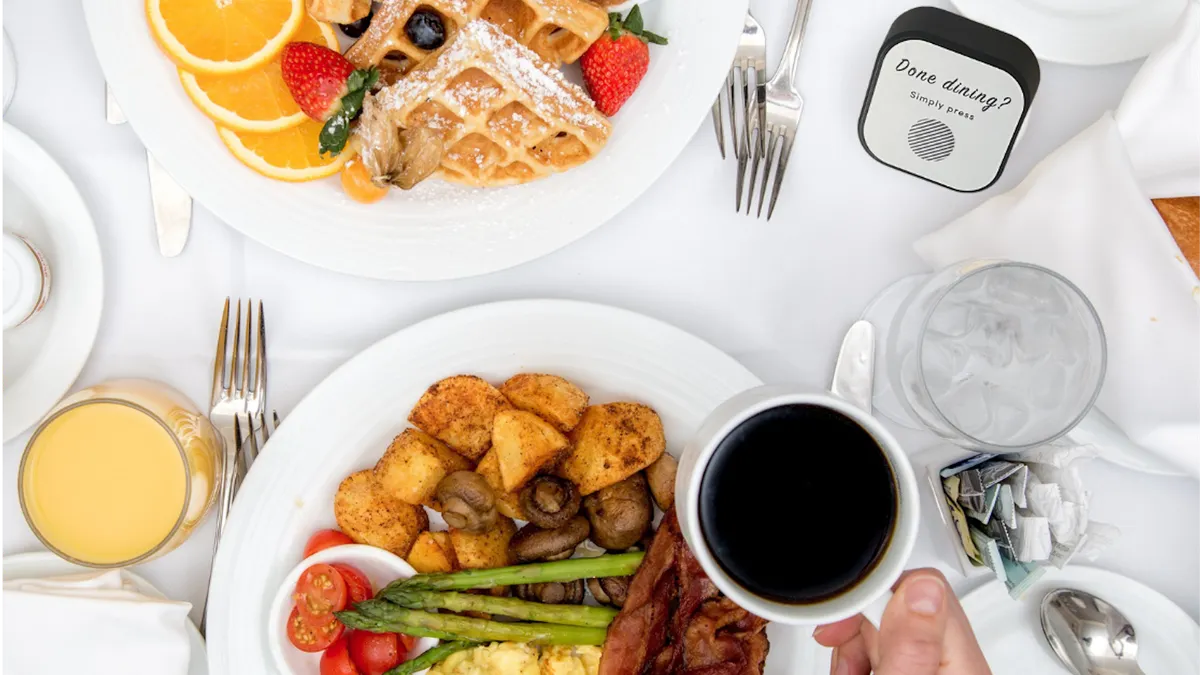
That’s where TrayAway’s tray-retrieval technology comes in to help minimize the guesswork and streamline the tray pickup process. TrayAway uses custom tracking devices that allow guests to call for tray retrieval with the click of a button.
According to TrayAway co-founder and CEO Josh Johnston, the devices can help cut down on the number of neglected trays sitting out in hallways. The technology not only improves staff efficiency and reduces labor expenses, but it also ensures hotel cleanliness, which can in turn improve guest satisfaction, he said.
Unattended trays with half-eaten food leave a hotel with a bad reputation and could cause a guest to post a negative review online, which impacts hotel business, Johnston explained.
“Someone outside the industry might say, ‘Who cares? Do any of these problems really matter?’” Johnston said. “But for the people that run these operations — the GMs, the hotel managers, the director — their careers literally prosper and perish based on customer feedback.”
Hotel Dive spoke to Johnston to learn more about how the technology works, how it solves an operational "pain point" and TrayAway's growth plans.
How the device works
TrayAway’s technology is simple but efficient, Johnston explained.
After a guest orders room service, the kitchen places a small physical tracking device, measuring 2.5 inches by 2.5 inches, discreetly on the tray. When guests are finished, they can click a button on the device that sends an alert via the hotel’s Wi-Fi network to staff that their tray is ready to be picked up.
Guests can then either leave the tray in their room for staff to pick up, or leave the tray outside their door for someone to retrieve.
“Even if someone does just place it in the hall because they don't want to be bothered, they're willing to click the button,” Johnston said about guests’ use. Once staff is notified, the tray is “only going to sit in the hall for a few minutes rather than hours.”
Once the tray is returned to the kitchen, a staff member can use the TrayAway Pro app or a computer to mark the room number as “completed,” according to Johnston.
TrayAway’s technology isn’t integrated with other hotel systems, as most hotel owners prefer to keep it as an “easy, standalone solution,” Johnston said. This helps from a security and IT perspective as it does not store any credit card numbers or any other proprietary information, he noted.
An 'unusual pain point'
Johnston came up with TrayAway after working in food and beverage operations at various Four Seasons hotels, where he noticed that unattended trays were “one of those really unusual pain points” that plagued hotel managers and lacked a clear solution.
“[Managers] would get upset about it, and they would get frustrated, and kind of bark down to the person below them, but they never had a solution or suggestion on what to do,” he noted.
Johnston began working on the technology as a weekend passion project before eventually forming the company. The first TrayAway tracking device rolled out in 2018 at the Fairmont hotel in Austin, Texas, which remains a subscriber to this day.
Since then, the product has reached more than 300,000 hotel rooms, with plans to expand to 1 million rooms over the next 18 months, Johnston said. TrayAway’s “sweet spot” so far has been luxury properties, including four- and five-star hotels, along with a handful of full-service hotels that offer in-room dining.
Additionally, the Wi-Fi-enabled technology can be implemented remotely, making it easier for the New Orleans-based company to scale. According to Johnston, TrayAway has customers in more than 50 counties, and more than 90% of those have administered services remotely, which also helps hotels cut down on costs.
Occupying the ‘white space’
TrayAway uses a subscription model, which comes with onboarding, training and support for staff and amounts to “several hundred dollars per month,” per Johnston.
Compared to technology providers competing to deliver the best POS or PMS solution, TrayAway exists in the “white space of the market” and identifies problems on the “outskirts of the property.”
Johnston teased the launch of a new product launching in the coming years, tentatively called “Mini Bar Pro,” that seeks to reinvent the hotel mini bar, which Johnston describes as a “necessary evil.” It aims to make it easier for hotels to track inventory and charge guests appropriately.
These products aim to help hotels address these less-considered, pesky problems — ones that have slipped through the cracks and lack a clear solution.
“We’re creating unique solutions designed specifically for very painful problems, but doing it in a unique way of hardware plus software, which is fun, but it also is challenging,” Johnston said.