

Dive Brief:
- Inflation-adjusted international visitor spending is projected to fall nearly $11 billion in 2026, following a year of economic uncertainty, according to a new forecast from the U.S. Travel Association.
- The organization projects that international visitor spending will decline 6.3% year over year in 2026 to $163 billion, resulting in spending 25% below 2019 levels. U.S. international arrivals are not expected to recover to 2019 levels until 2030, per U.S. Travel.
- The projected spending decline represents economic activity at risk across visitor-serving businesses, such as hotels, per U.S. Travel. According to the association, there are several key policy actions that must be taken to “protect holiday travel” and “reverse the loss of international visitors.”
Dive Insight:
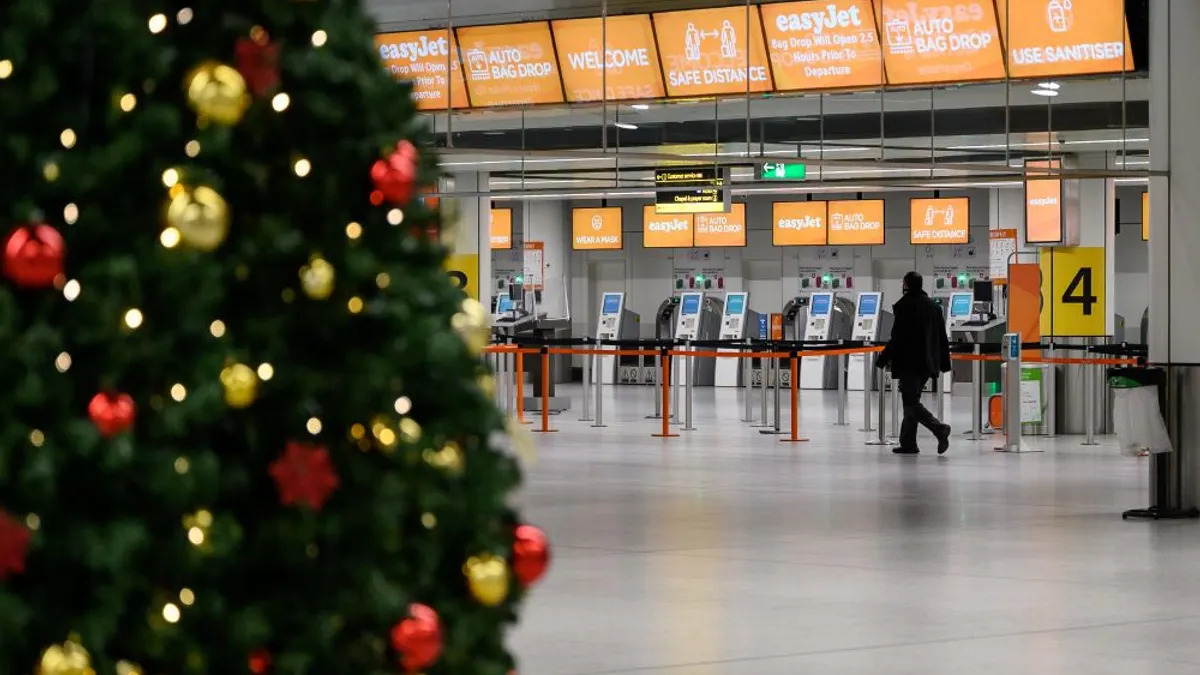
To reduce the threat of holiday airport disruptions and travel chaos still this year, U.S. Travel suggests that the current Congress should pass government funding and enact lasting protections that ensure Transportation Security Administration officers and air traffic controllers receive uninterrupted pay during future funding lapses.
The association also suggests that, in 2027, the new Congress — comprising members elected earlier this month — should reauthorize and restore full funding to Brand USA; expand visa processing and stop unnecessary visa fees, entry barriers and uncertainty; and accelerate investments in air traffic control and airport security modernization.
“The current Congress must keep America moving this holiday season. The next Congress must help America compete,” U.S. Travel CEO Geoff Freeman said in a statement. “We have the opportunity to deliver a better travel experience for Americans and bring more international spending and jobs back to our communities.”
Earlier this year, the American Hotel & Lodging Association similarly called for funding to be fully restored to Brand USA. AHLA, which represents roughly 80% of all franchised hotels in the U.S., also vowed to oppose and delay visitor visa fee increases and streamline visa processing.
AHLA previously told Hotel Dive that international travelers are indispensable guests who typically stay longer and spend more per trip than domestic travelers. Therefore, a decline in international visitor spending would negatively impact the nation’s hotel industry.
During fourth-quarter 2025 earnings calls, hotel CEOs attributed U.S. RevPAR declines to softer international inbound travel. According to data from the U.S. Travel Association, international inbound travel spending fell 2% year over year for full-year 2025, while international inbound visits fell 5.5% for the year.
However, in the latest round of quarterly earnings, hotel executives expressed optimism about the current travel landscape and reported widespread U.S. RevPAR gains.
Growth in international travel spending is projected to resume in 2027, at 2.8%, and strengthen from 2028 onward, per U.S. Travel.