

Global hospitality company Minor Hotels is expanding across North America, building on a strategy that has been in the works for several years, according to the company’s vice president of development for the region, Genna Panagopoulos.
Panagopoulos joined Minor Hotels in November from IHG Hotels & Resorts and is tasked with growing the company’s brand presence across the U.S. and Canada. Within her first several months in the role, Minor announced two upcoming hotels for its luxury wellness brand Anantara, in Miami and Turks and Caicos, as well as a flagship property for its Wolseley Hotels brand in New York City.
The company is plotting additional growth across the U.S. and Canada, with the latter being in the midst of a demand boom, per Panagopoulos. In a conversation with Hotel Dive, the VP shared what markets Minor is eyeing and why charting a course across North America is a “no-brainer.”
Luxury lands in America
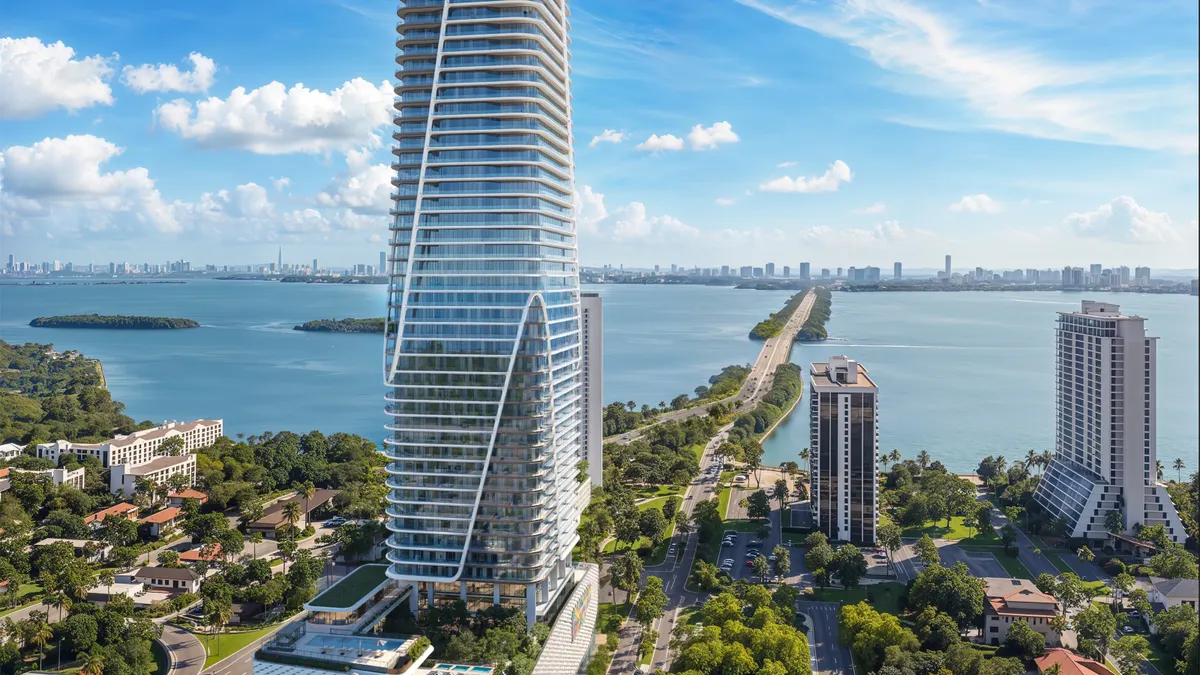
In the U.S., Minor Hotels will open its Anantara brand in Miami in 2030, with a “lifestyle destination” offering 100 branded residences, 120 resort units and 50 hotel suites, as well as vitality and longevity amenities. Meanwhile, the 76-key Wolseley Hotel New York, inspired by the brand’s namesake London restaurant, will mark the hotel concept’s debut in 2027.
The new properties are a result of Minor’s strategic preparation “for a season of growth” in North America, a region that presents “so much opportunity,” Panagopoulos said.
Miami, specifically, presented a standout opportunity to bring Anantara to the U.S. because of its strong international and luxury demand fundamentals, Panagopoulos said.
Anantara has historically been located in resort markets around the world, but Minor Hotels has started to expand the brand to urban destinations as well. This makes Miami — which Panagopoulos called one of America’s “billboard markets” — a perfect location for the brand’s U.S. debut.
“Landing a well-known brand in a highly visible market is key for us, and [is] really setting the growth ambitions here in North America,” Panagopoulos said of the Anantara property in Miami.
Meanwhile, with its branded residential component, the Miami Anantara will tie together two pillars of the brand: enabling guests to embrace a wellness-focused lifestyle on a daily basis, while providing them the premier services of a hotel, Panagopoulos explained.
Other U.S. markets that are high on Minor’s priority list for Anantara include Park City, Utah, and New York’s Hudson Valley, Panagopoulos said. Other luxury wellness brands have similarly eyed expansion in Utah’s ski country, as well as the New York leisure destination.
Minor Hotels is also targeting growth in Boston, Chicago, Los Angeles and San Francisco.
Canada is calling
“Following so much interest coming out of Canada and so much development activity,” Panagopoulos said, Minor also plans to pivot its strategy to explore growth across Victoria, Quebec City and Alberta. The company already has its eye on Toronto, Vancouver and Montreal in Canada.
In the region, developers are particularly interested in the flexibility of brand standards across Minor’s portfolio, according to Panagopoulos. Because of this, there are significant expansion opportunities for Minor’s collection brands in Canada, she said. Hospitality executives told Hotel Dive earlier this year that collection brands would present a “massive opportunity” in 2026.
“We're going to focus a lot on Canada over the next couple of quarters,” Panagopoulos said. This strategy shift comes as the region sees an influx of tourists and unprecedented hotel performance growth, she added.
According to the most recent visitor data from government agency Statistics Canada, the number of trips to Canada by U.S. residents in March increased 4.4% year over year, while trips to Canada by overseas residents went up 5.6% for the same period. In the fourth quarter of 2025, spending by international visitors to Canada grew 3.6% year over year, the fastest pace in two years, per the agency.
Canada’s hotel industry, meanwhile, saw its highest annual top-line performance on record in 2025, with 4.2% growth for the full-year, according to CoStar data. This coincided with key full-year U.S. hotel performance metrics falling for the first time since 2020. In the first quarter of 2026, though, U.S. hotels reported brighter RevPAR results.
Minor Hotels, in particular, has seen a healthy pace in demand over the last two months, as broader uncertainty eases and a “more positive sentiment” settles across the U.S. hotel industry, Panagopoulos said, signaling strong growth opportunities ahead.