

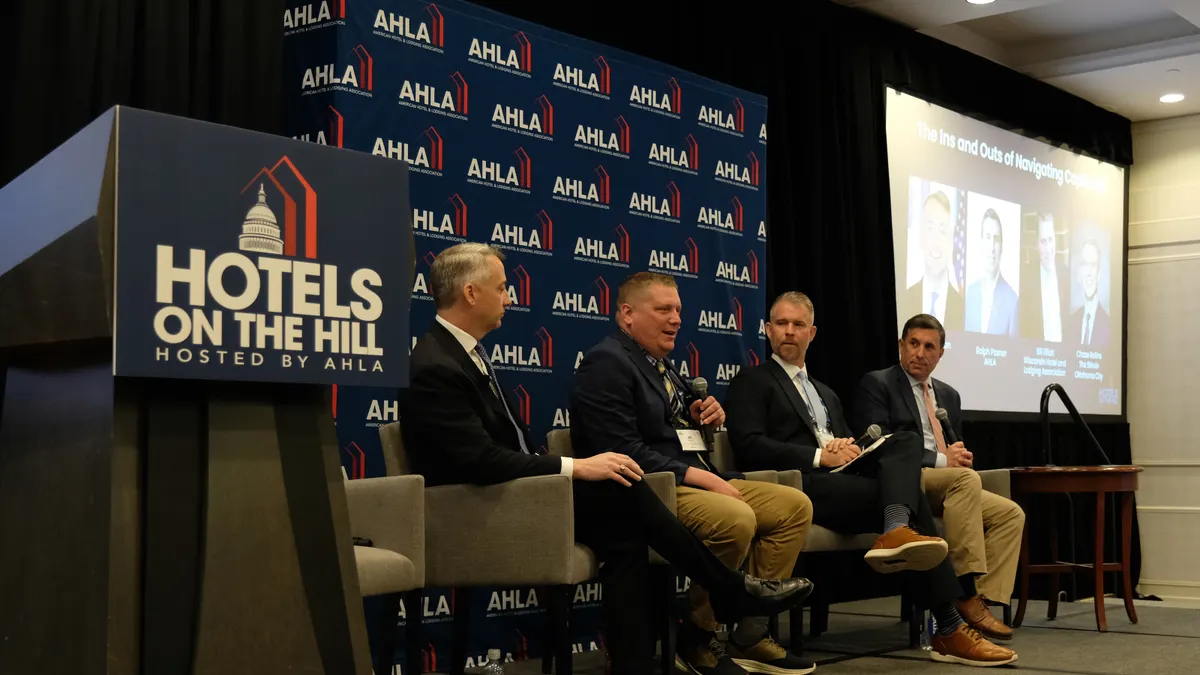
WASHINGTON — More than 300 hoteliers convened at the lower ballroom of the Hilton Washington DC Capitol Hill Tuesday to advocate for policy changes they say would guarantee a robust labor force and increase overall inbound international travel.
This year’s American Hotel & Lodging Association’s Hotels on the Hill event drew one of the largest turnouts in its 20-year history, bringing together general managers, owners and executives across 46 states to discuss how to better position the industry for long-term growth and success, per the organization.
The lobbying event also comes nearly a month before the start of the 2026 FIFA World Cup, with many hoteliers waiting to see exactly how bookings will unfold closer to the tournament and what its greater impact on tourism will be.
“With the World Cup right around the corner here, I think it’s really critical for these things to get addressed before the Olympics [come to Los Angeles in 2028],” said Jon Bortz, chairman and CEO of Pebblebrook Hotel Trust and chair of AHLA’s HotelPAC Advisory Council, in an interview with Hotel Dive.
With this in mind, hoteliers are aiming to pass legislation that will pave the way for a more reliable workforce and encourage more international travel to the U.S.
Expanding the hotel labor force
According to hoteliers at the event, one of the association’s main priorities is expanding the current H-2B visa program, which is a seasonal workforce program that allows hotel operators to outsource labor to foreign workers once they’ve demonstrated to the U.S. Department of Labor that they cannot find enough U.S. workers.
As of now, the program permits 66,000 visa applications, with 33,000 workers allocated per season, per a government website; however, that cap hasn’t been updated since the 1990s, according to Bortz, and the industry’s labor force needs has significantly grown since. The Department of Homeland Security has previously amended the cap, making additional worker visas available.
“The business has expanded dramatically over that period of time,” he said. “You have a lot more resorts throughout America, and so therefore the need [for labor] has gone up dramatically.”
Bortz and other resort operators are pushing to see this number change and reflect a number based on the industry’s needs. According to AHLA, there are about 100,000 openings in the industry nationwide.
Scott Steilen, president and CEO of Sea Island Company in Georgia, told Hotel Dive that his resort relies heavily on the program during peak demand time between April and October. Across the resort properties, Steilen said he requests about 180 H-2B workers, many of whom hail from Jamaica. But for the past two years, only 80 have been approved.
Currently, the program issues work visas based on a lottery-like system, which can leave resorts without sufficient workers once the busy season hits.
“[A hotel’s] labor is a big empty void,” Steilen said. “They have multiple backup plans, but every one of us goes into the year with real nervousness about how we’re going to fill those positions.”
A proposal that would introduce a “certified seasonal employer” designation has gained traction among some lawmakers, and AHLA members are hopeful it gets approved, per Steilen. The proposal stipulates that an employee with five years of H-2B experience and in good standing with the DOL would be exempt from the lottery system, essentially guaranteeing employment at a resort.
Steilen added that the pushback for increasing the number of H-2B visas mostly comes from the “misperception” that the program takes away American jobs and is a way for hotels to pay workers less.
“This isn’t about taking those wages; it’s also not about hiring cheap labor or paying a depressed wage,” he said. “We have to pay prevailing wages … there is no way that we can bring this labor in from outside and pay a lower rate than we would pay a domestic worker.”
Improving international tourism
AHLA is also keen on getting lawmakers to pass the VISIT USA Act, first introduced to Congress in November, which would restore funding to Brand USA, the country’s official marketing agency that’s tasked with increasing inbound international travel.
In 2025, Brand USA’s funding was cut by 80%, which also threatened market share and job growth, Bortz noted. He also shared that the U.S. is facing a travel trade deficit, estimated to be around $70 billion, despite a “healthy appetite for travel.”
“Global travel is in a secular positive trend,” Bortz said, noting that travelers just aren’t coming to the U.S. at this time.
Especially with this summer’s World Cup and the upcoming 2028 Summer Olympics in Los Angeles, hoteliers are eagerly searching for ways to welcome more international visitors, who on average spend eight times more per trip than domestic travelers, according to U.S. Travel Association.
Another of AHLA’s main legislative priorities this year is the American Franchise Act, which would codify the joint employer standards. Passage of this bill would also preserve the franchise business model and protect small business hotels, according to AHLA.
In fact, nearly 60% of U.S. hotels are franchised, supporting more than 2.8 million jobs, per the organization.