

Dive Brief:
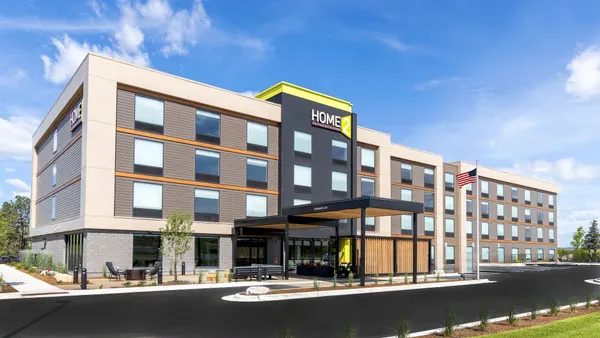
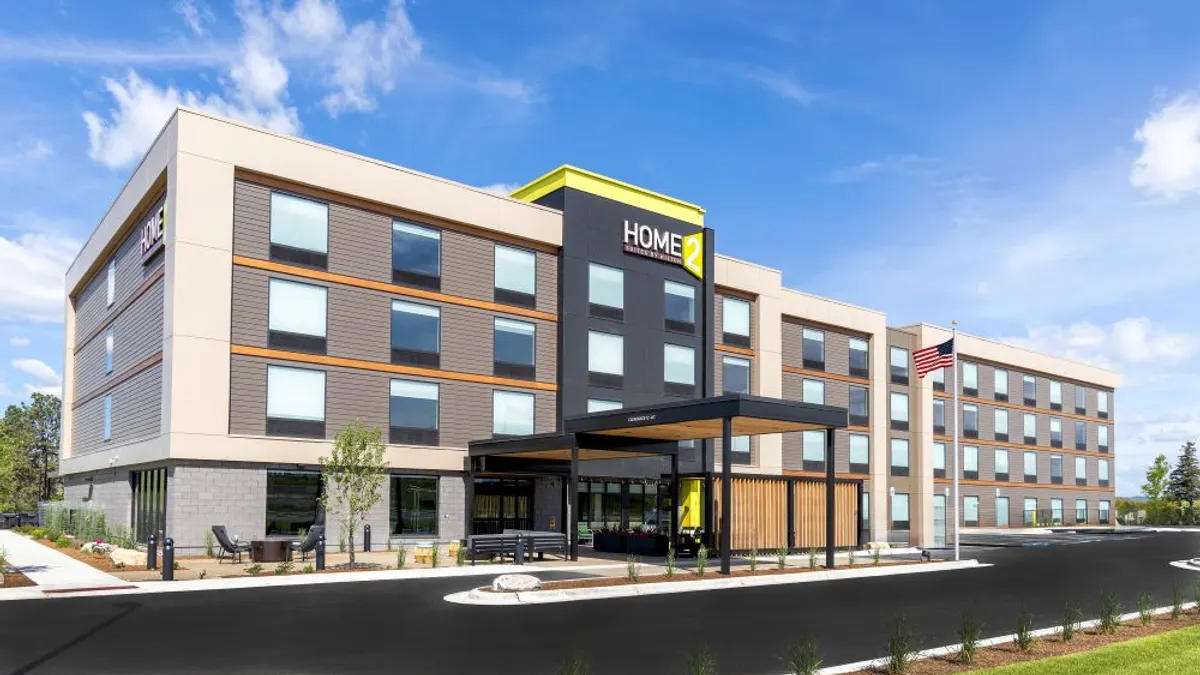
- Hilton launched the Home2 Suites by Hilton Clean Energy Prototype, an optional design concept for the upper midscale extended stay brand that aims to reduce operational energy costs and environmental impact, the company announced Tuesday.
- Designed with all-electric systems, renewable energy and high-efficiency building technologies, the prototype represents Hilton’s most sustainable offering and is its first prototype designed with zero operational emissions, per the release.
- Hilton developed the prototype to address rising hotel operating costs and evolving energy markets, according to the company. The model launches as owners seek “a turnkey option to lower operating expenses, improve energy efficiency and reduce emissions,” Jean Garris Hand, vice president and global head of sustainability and responsible business at Hilton, said in a statement.
Dive Insight:
As U.S. hotel utility costs surge, Hilton’s new Home2 Suites prototype aims to reduce operational energy costs for owners while creating a stronger return on investment over the life of their property, the company said.
The new prototype was designed to “deliver measurable owner value,” with the potential to reduce annual energy costs by between 18% and 40%, while driving approximately 30% greater energy efficiency compared to a traditional Home2 Suites prototype, per the release.
In San Jose, California, where Hilton has conducted energy modeling analysis on the Clean Energy Prototype, the concept was found to reduce annual hotel energy costs by an estimated 32% and create a $670,000 increase in potential asset valuation. The prototype is also anticipated to have a 0.6% lower net cost to build compared to the brand’s traditional model.
In addition to delivering owner benefits, the new prototype is also expected to resonate with guests, who continue to prioritize sustainability when making travel decisions.
Home2 Suites already provides owners with sustainable building choices aimed at reducing energy use, conserving water and supporting more efficient operations, per the release. These include energy-efficient building design and roofing materials, water-conscious landscaping, Energy Star-rated appliances, saline pools, reusable dishware and LED lighting.