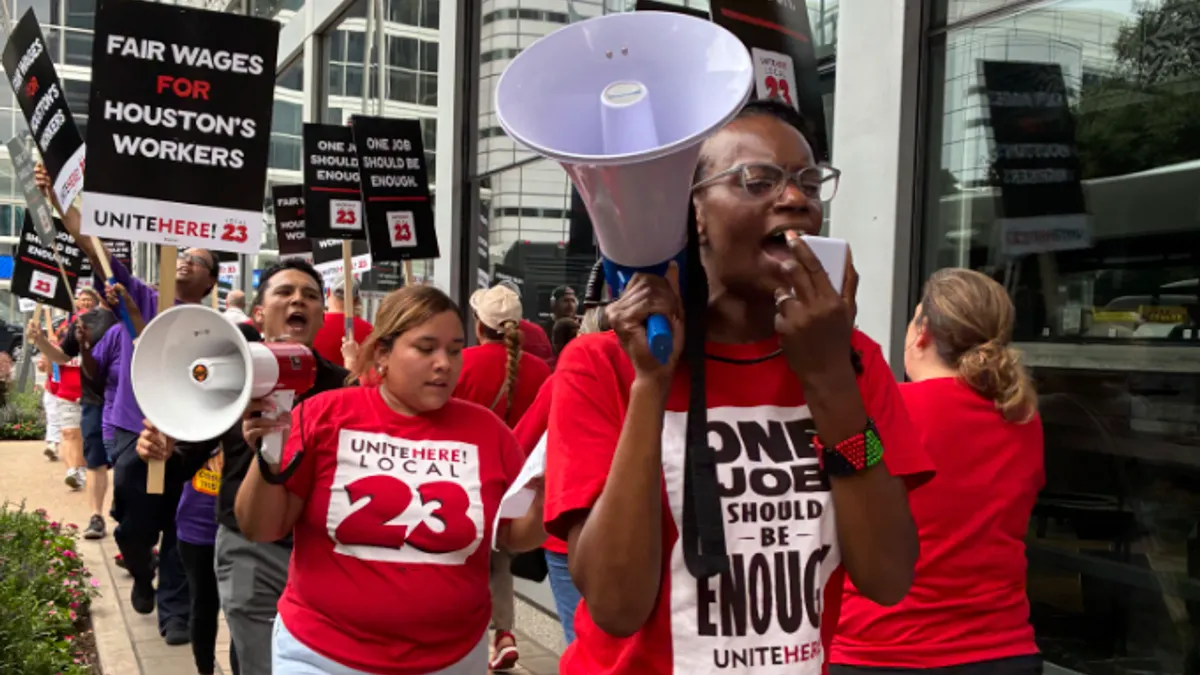
U.S. immigration policy and actions from the current Trump administration are having a detrimental impact on the nation’s hospitality industry, according to a new report from labor union Unite Here titled “Inhospitable.”
The U.S. travel market is “stagnating” despite a worldwide boom in tourism and the upcoming 2026 FIFA World Cup, according to the report, which cited data from 50 news organizations, travel and tourism bureaus and government websites, and included statements from union members working in Washington, D.C., Miami, Las Vegas and Seattle.
The report attributes the problem to “political statements from government officials creating a fear of discrimination” as well as “highly visible videos and photos of military occupations in major American cities and ICE agents rounding up immigrants en masse.”
As a result, fewer people are traveling to the U.S., and employment is down in the tourism and hospitality sector, the report said. In addition, it said hotel revenue is “almost flat, growing at its slowest ever rate” apart from previous periods of recession and the COVID-19 pandemic.
“[The] U.S. hospitality industry is suffering today from the current administration’s policies and political vitriol,” according to the report. “Weakness in the industry has real consequences for the millions of workers who keep it running, and creates a ripple effect in cities across the U.S. that rely on tourism to support the local economy.”
Administration impact
One way Trump administration policies have harmed the industry is through the sudden loss of work authorization for thousands of people with protected immigration status working in hospitality, per the report.
“In Miami, one of many cities where this has played out, U.S.-born UNITE HERE members who are still on the job have endured harder shifts and employers have faced increased overtime costs,” the report said. “At the airport, workers carry an additional burden as they worry about the safety consequences of understaffing.”
Unite Here represents approximately 300,000 people across Canada and the U.S. working in the hotel, gaming, food service, manufacturing, textile, distribution, laundry, transportation and airport industries, per the organization’s website.
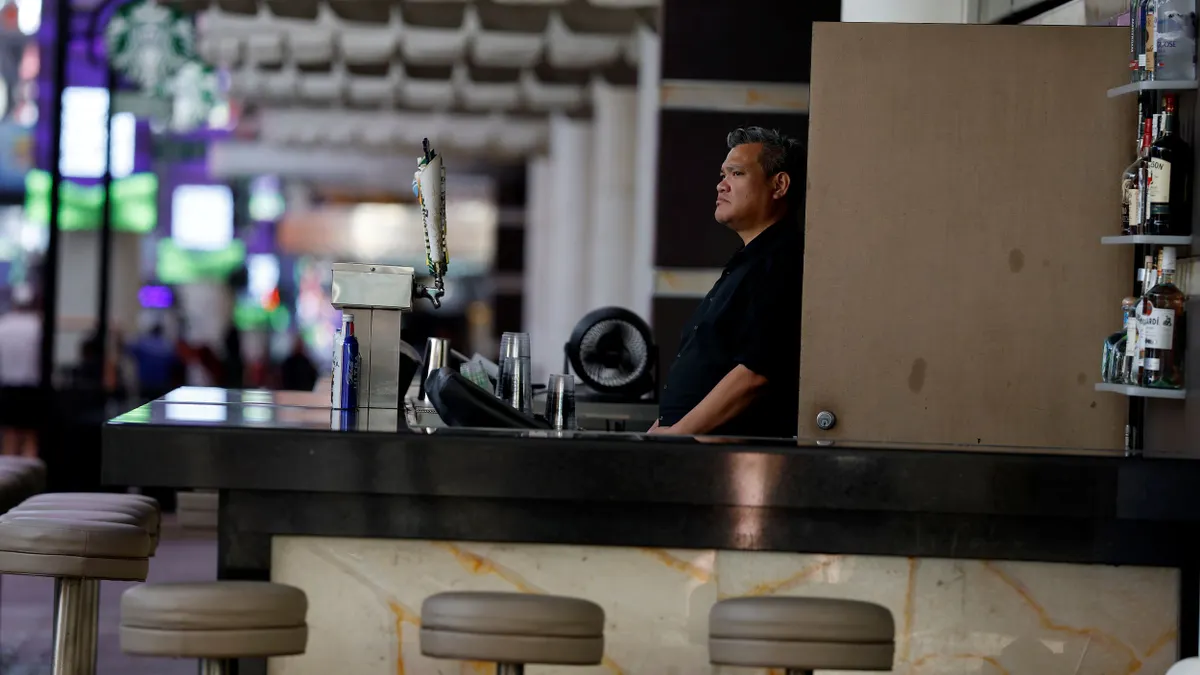
The report also pointed to demand-side challenges, noting that the Las Vegas Strip saw “a substantial decline in revenue because Canadian and other international tourists are coming much less frequently.”
Meanwhile, in Washington, D.C., the administration’s use of military deployments as a show of force led to “marked impacts on the health of the local hospitality industry,” the report said.
Tourism at risk
According to a May 2025 World Travel & Tourism Council report, the U.S. was the largest travel and tourism sector in the world, but was the only country among 184 economies that was “forecast to see international visitor spending decline in 2025.”
Fewer tourists means fewer jobs; however, a decline in the overall number of immigrant workers in the hospitality industry also accounts for some of its supply side shortages.
“It is critical to understand that not all workers impacted by these changes are without legal status,” the report said, adding that there are both fewer immigrants in the workforce, and at the same time the jobs of their U.S.-born co-workers “have become harder and more dangerous.”
The labor union said that some of its members in hotels reported having to work longer shifts to cover for their colleagues whose Temporary Protected Status (TPS) or Cuba, Haiti, Nicaragua and Venezuela (CHNV) parole was revoked.
The administration’s policies and ongoing political vitriol have “upended the industry on multiple fronts, resulting in fewer visitors, fewer available workers, and a hotel industry in which only luxury properties can thrive,” the report said. “Together, this is a recipe for disaster for a critical economic sector. … So long as these policies persist — or if newer, harsher versions of them are put into effect — the viability of critical industries and of the U.S. economy at large remain at risk.
The White House maintains that border security is a top priority and that tougher enforcement efforts “protect American workers, reduce strain on local communities, and reinforce the nation’s right to control its borders and determine who enters the United States.”