2025 was marked by a significant uptick in hotel investment, with transaction volume rising 17.5% year over year to reach $24 billion, according to JLL’s 2025 U.S. Hotel Investment Trends report, obtained by Hotel Dive.
This growth was in large part due to strong private equity activity and improving debt markets, JLL said in its annual hotel report.
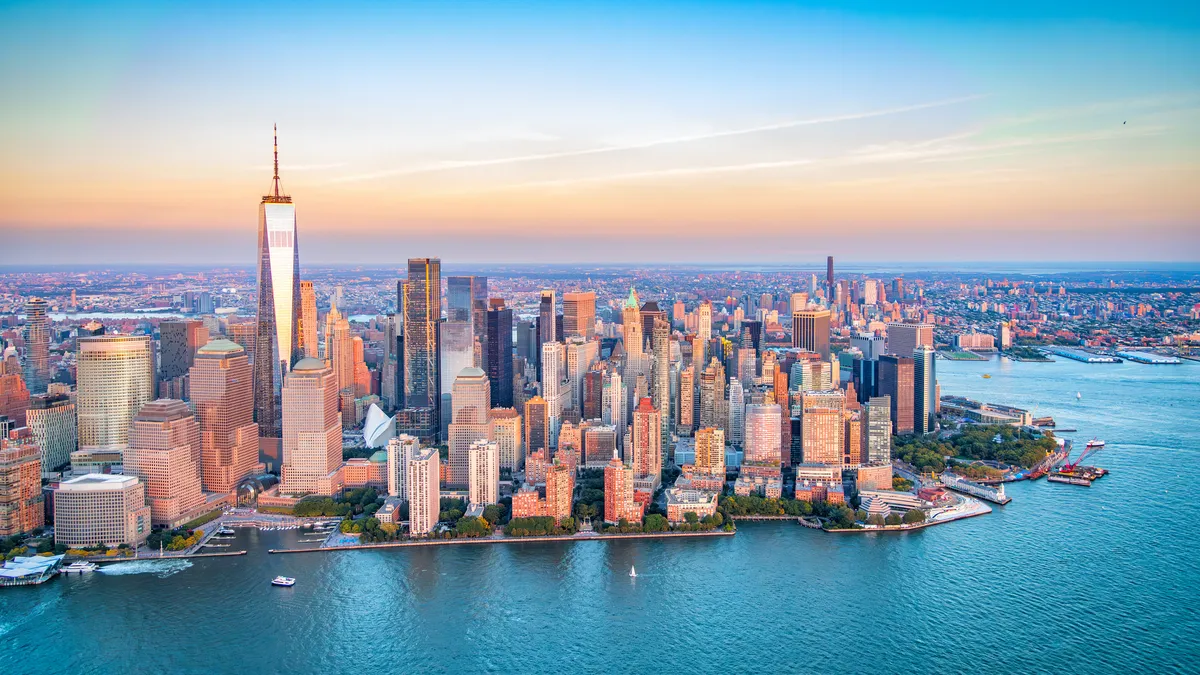
New York City, Phoenix and Washington, D.C., led transaction activity at $3.7 billion, $1.5 billion and $1.2 billion, respectively. Several large-scale deals in those markets drove overall volumes, illustrating a strategic focus on assets in key urban centers and growth markets where investors are willing to bet long term.
Data from the report also highlighted changing dynamics in hotel investment, with foreign capital and high-net-worth individuals becoming more active in the space, reflecting hotels’ “compelling value proposition, particularly given the historic discount to replacement costs and favorable yield profiles compared to other property sectors.”
Kevin Davis, Americas CEO of JLL Hotels & Hospitality Group, noted that recent Federal Reserve actions contributed to driving hotel investment activity. When the Fed started lowering borrowing costs in September 2024, “the overall cost of debt has decreased by almost 300 basis points, which has enabled investors to get positive leverage when acquiring an asset.”
“This dynamic fueled transaction activity in the second half of 2025 and will drive increased transaction activity in 2026 and will be the catalyst for transactions in 2026,” Davis said in a release.
When the Fed cut the main interest rate in December by a quarter of a point, hotel leaders told Hotel Dive that the trim could encourage new investment, and additional rate cuts could spur more deals. At its January meeting, the Fed held rates steady at between 3.5% and 3.75%.
2025 also reflected the continued wealth bifurcation at play in the hospitality industry, with RevPAR for luxury properties increasing by 3% year over year, while midscale and economy segments decreased by 2.8% and 4.4%, respectively, according to JLL.
More opportunities ahead
According to the report, 2026 events, including the 2026 FIFA World Cup and the 250th anniversary of America, present “substantial” opportunities for hotels.
World Cup host cities, for example, could experience mid-double-digit RevPAR growth in 2026 due to the tournament's extended duration and international appeal, the report predicts.
Dan Peek, Americas President of JLL’s Hotels & Hospitality Group, said the World Cup “represents a transformational opportunity for U.S. hotel markets.”
"Combined with America's 250th anniversary celebrations, select cities are positioned for exceptional performance in 2026. Our forward-looking analysis indicates this could be a watershed moment for the hospitality sector,” Peek said in a statement.
On the supply side, JLL predicts new hotel supply growth to remain well below the long-term average of 1.7%.
“This constrained supply environment, combined with the 43% urban market share of transaction volume in 2025, demonstrates investors' confidence in existing assets benefiting from limited new competition,” the report states.
In terms of challenges for the year ahead, hoteliers will likely continue to grapple with rising labor costs and persistent shortages, shifting traveler preferences and agentic commerce.