Study Hotels is a boutique brand that brings together distinct design and university culture to offer students, families, faculty and tourists alike a uniquely personalized stay.
The brand’s portfolio spans four “Studies” on Yale University in Connecticut, the University of Chicago, Johns Hopkins in Baltimore and between the University of Pennsylvania and Drexel University in Philadelphia. Each property is shaped by the spirit and energy of nearby campus life, according to the brand.
Founded by Paul McGowan in 2008 in New Haven, Connecticut Study Hotels has been part of a nearly 20-year evolution of college-town hospitality. The segment has become more saturated in recent years, with companies like Hilton growing college-town focused brands. For Study Hotels, though, the brand’s thoughtful and unique offerings help it stand out, McGowan said.
In an interview with Hotel Dive, McGowan shared how lifestyle hotels can thrive in university markets by offering intuitive design and experiences rooted in guests’ personal connection to campus. He also gave a glimpse into Study Hotels’ growth strategy amid a tough hotel development environment and broader challenges facing higher education.
This interview has been edited for clarity and brevity.
HOTEL DIVE: What was the inspiration behind Study Hotels, and why are university markets a strong opportunity for hotels?
PAUL MCGOWAN: Back in 2006-2007, I started traveling with my daughter looking at colleges all around the East Coast, and I was just amazed at the lack of quality accommodations in a lot of the markets that I visited.
It didn't take a lot to figure out that these markets are very cyclical in terms of their demand. Clearly, when the university is in session there’s much greater demand than in the off-season, which was likely the reason why there weren’t many full-service hotel operations in the markets that I was visiting. But the opportunity seemed apparent to me. This period of time in someone’s life, going to college for four years, is a very impressionable time. A lot of emotional connection is made, and it was very intriguing to me that there wasn't yet a way, in our hospitality world, to connect people with that experience.
I fell upon a real estate opportunity at Yale University, where there was a clear need for more upscale hotel product. I had prominent people telling me that in 25 years of teaching and visiting Yale University, they never stayed in New Haven because of the lack of good accommodations in their mind. To me, this seemed like a perfect proving ground to see if a full-service model could work in a university market.
For hotels within university markets, how important is design?
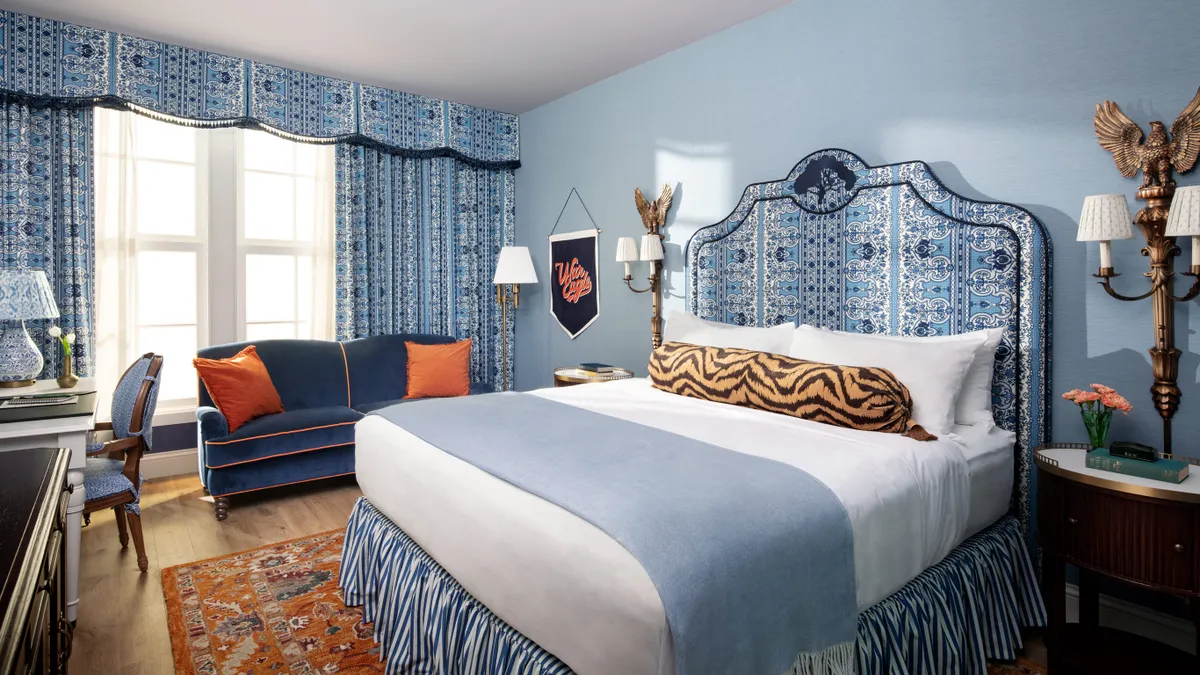
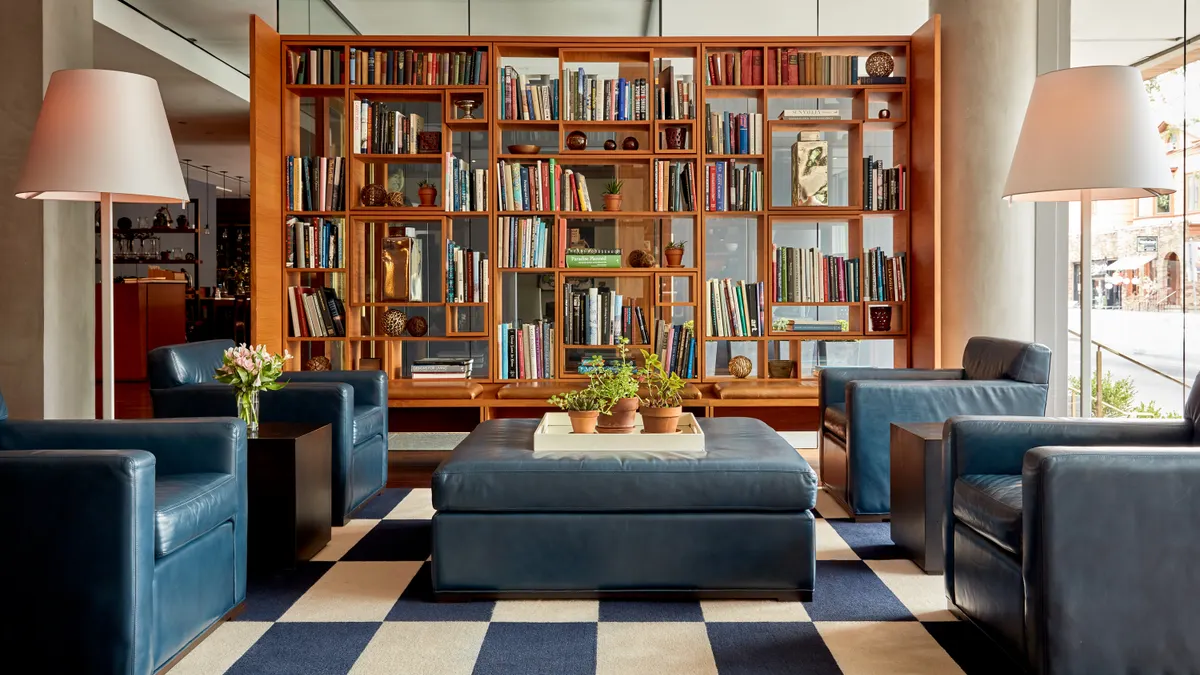
We take design very seriously. Without hesitation, our approach to development and design is very thoughtful — perhaps more thoughtful than you might expect. We really try to understand the character and personality of the school. We like to use local craftspeople and take advantage of the environment that we’re in. But we avoid clichés. We try not to get caught up in school colors and more obvious design elements. We try to find other ways to make connections, where guests can truly sense the connection with the university and its specific personality without it being in their face.
Our goal ultimately is to make sure that our guests have a really great experience. We want people to leave just not really knowing why it felt so good, but knowing that it did, and make sure that they come back. We pride ourselves on building near-100% loyalty from the customers that we get by the way that we treat them and the environment that we create for them, and design has a lot of emphasis in how we do that.
What are the challenges facing hotels in university markets?
School is in session. It’s one of the parts of this that made sense to me from the beginning. There is a certain level of comfort baked into the fact that these institutions are functioning at full capacity for the rest of time, basically.
However, universities are clearly under pressure. The times are uncertain. There’s been disruption in higher education that no one anticipated. This has likely resulted in bigger challenges for the universities themselves to navigate, whether it be adjustments in the student body population or where those students come from. But it’s not something that has been really noticeable to us.
What are your plans for brand expansion?
We remain in a more opportunistic mode, based on the fact that credit markets have not stabilized yet, construction costs are still on the high side, underwriting projects today is a bigger challenge and getting them financed is even tougher. Building today is not as safe as it was three or four years ago.
We do have pursuits that we keep active. That’s something that we’ll always do, and we'll continue to do. As confidence grows and as capital frees up, you’ll see us coming to the table with more openings in the future, but we’re not in a race.
In our industry, anytime there’s a downturn, it’s usually a great time to be in development mode because you’ll be on the upside of the next cycle. This time feels a little different to me from the cycles that I’ve been through. There’s just a little too much uncertainty to be initiating projects at the moment. So, we’ll wait and see.