

Hotel Tech-in is our regular feature that takes a closer look at emerging technology in the hospitality industry.
Once open, a boutique hotel along the coast of New England will operate as a fully functional hotel, but without the usual front-desk staff and check-in line.
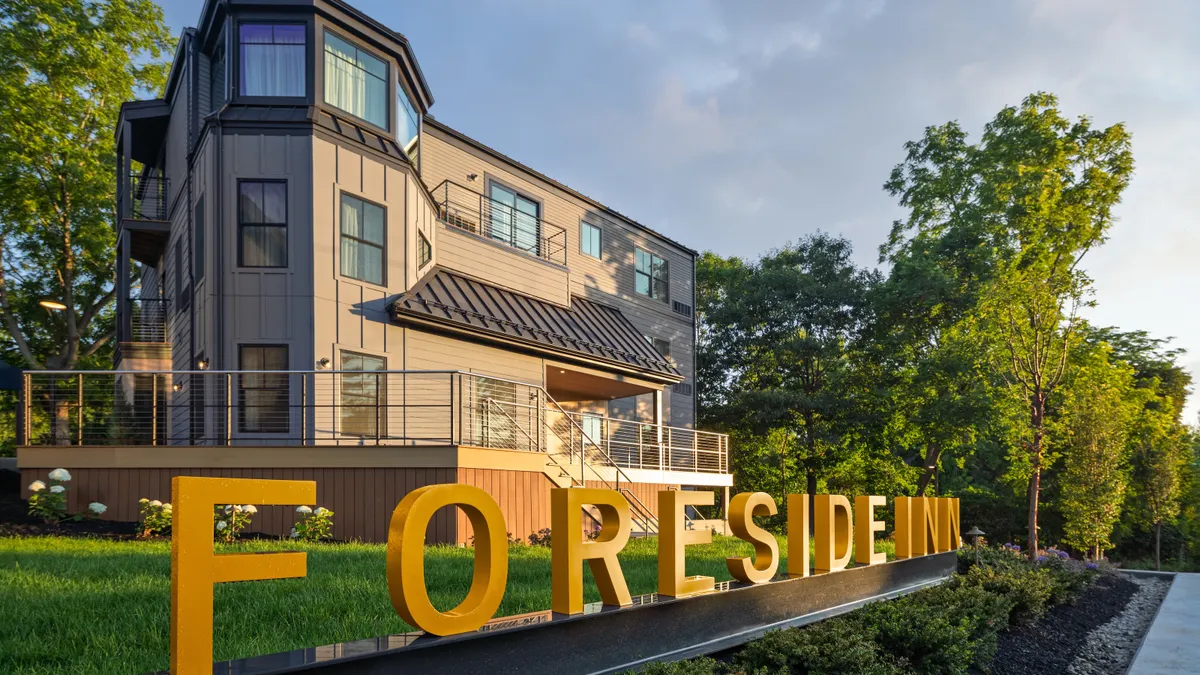
Thanks to technology, the forthcoming Foreside Inn in Kittery, Maine, a 24-room property opening Aug. 1, will run with a lean staff and rely heavily on a “remote concierge” model that allows guests to bypass reception and head straight to their rooms.
According to the hotel’s general manager, Christina Lehmann, the concept offers a seamless, “headache-free” stay for guests, while also eliminating some operational pain points and extra costs for owners.
At the Foreside Inn, the lean staffing model — which includes housekeepers, a general manager and a marketing manager as on-site staff — is expected to save the hotel about $200,000 a year, compared to a traditional staffing model for a property of the same size, according to property owner Taylor McMaster.
“The reality is that modern technology in 2026 enables a 24/7 remote concierge, and all the services that one would expect from a front desk, to be done remotely,” McMaster said. “We've seen a big transition since COVID, with a lot of work going remote, and we just see this [staffing model] as kind of an extension of that.”
Hotel Dive spoke with Lehmann and McMaster to learn about how different technologies help power the hotel and how the model can help save on costs for small hotel owners while also delivering value to guests.
A virtual front desk
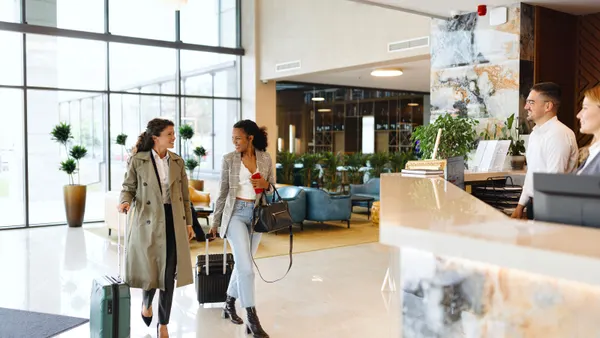
A guest’s hotel stay typically begins at the front desk, but not at the Foreside Inn.
Instead, guests receive a one-time personalized PIN code for the duration of their stay, giving them access to the property as well as their individual rooms.
“Rather than having somebody sitting at a front desk who may be unengaged for a period of time, our staff is able to respond to guest needs at whatever property they need to. And we can scale up and scale down that response as needed.”

Taylor McMaster
Property owner of The Foreside Inn
“The most important thing is this one-time PIN code that provides safe and secure access because it's randomly generated and only lasts for your stay,” Lehmann said.
Foreside Inn uses Australia-based mobile key provider Goki, which manufactures room locks and programs the software for generating a random PIN code, she said. The inn also uses Mews, a property management system that connects to all parts of the hotel’s operations.
To ensure guest safety — a “top priority” for the hotel, Lehmann said — security cameras are also installed throughout the property to monitor activity.
During their stay, guests can contact the Foreside Inn’s 24/7 digital concierge service via phone call or text message if they have any questions. This remote concierge staff is operated by a four-person team powered through artificial intelligence platform Akia.
On the day of a guest’s departure, the hotel sends a checkout link via text message, eliminating the need for front-desk interaction.
“You don't have to again wait in line or worry about missing your flight or wait for the elevator,” Lehmann said. “All the usual kinds of annoyances when you're spending a little bit of extra time waiting for stuff, we've tried to eliminate some of that.”
Benefits to hoteliers
Running a hotel with a lean staff requires intentional planning as well as communication and organization to get the entire staff, including on- and off-site workers, on the same page, said Lehmann, who also manages the 18-room Rockport House in Rockport, Massachusetts, which operates on a similar model.
"I want my guests to have a comfortable, enjoyable experience. What we are trying to do is still offer that, but make the experience a little bit easier in terms of cutting out some of the headaches of checking in and checking out, and also pass along some of those savings to the guests."
Christina Lehmann
General manager of The Foreside Inn
“You need to really stay on top of all the different projects and ongoings, so that you can keep the business moving forward,” she said.
For hoteliers, Lehmann said the concept could help them save on expensive overhead and payroll costs for smaller properties.
The remote concierge model also allows for remote teams to manage more than one property at a time, McMaster added. For example, the Foreside Inn’s remote team also handles customer requests at the Rockport House.
“Rather than having somebody sitting at a front desk who may be unengaged for a period of time, our staff is able to respond to guest needs at whatever property they need to,” he explained. “And we can scale up and scale down that response as needed.”
McMaster noted such an approach wouldn’t work on a 100-room hotel, for instance, as overhead costs would be too high. However, the model “enables a lot of value to be provided at a smaller-scale property,” offering guests “more upscale rooms at lower rates.”
“Our model is not explicitly about cost savings; it is about enhancing our overall value proposition and allows us to invest in other areas that affect guest satisfaction,” he added. These include investing in properties in “great locations” with walkable amenities; thoughtful propertywide design features; and high-end finishes in each room, including top-end bathroom products and mattress options.
During the on-season, rooms at the hotel start at $199 per night, while others in the area are closer to $300, per Lehmann.
Hospitality still a part of the equation
Even without a staffed front desk, thoughtful hospitality remains a part of a guest’s experience at the Foreside Inn, said Lehmann. For example, if a guest is coming to visit for their birthday, the concierge team can wish them a happy birthday via text and place a celebratory card in their room upon arrival.
“I want my guests to have a comfortable, enjoyable experience,” she said. “What we are trying to do is still offer that, but make the experience a little bit easier in terms of cutting out some of the headaches of checking in and checking out, and also pass along some of those savings to the guests.”
Another time a young family stayed at the Rockport hotel and forgot an essential item for their newborn. Lehmman was able to arrange a Walmart delivery without having to be there in person.
“I would say to anyone that wants to try this, it's still about the people that are staying with you,” she said. “You still have to care about them.”