The following is a guest post from Alexis Readinger, founder of architecture and design firm Preen. Opinions are the author’s own.
What’s one piece of advice every hotel operator needs to hear? The biggest mistake is thinking that value is created in deletion.
For hotel food and beverage, value lies in creation. Just as in any other area of hotel operations, there is no path to success simply through bottom-line management. Especially when hoteliers can’t lean on RevPAR growth to boost revenue, F&B has a clear role to play in driving hotel profitability.
Start with a clear goal
Unless the concept is to craft a step into an alternate universe or to present a commodified branded space, any F&B design should account for the spirit of place. In a hotel, that includes not only the intention of the property, but its architecture and location. This is hospitality. It has a point of view and a clear direction.
Beloved places have great character. They are created to communicate a point of view, to showcase a cuisine, to highlight heritage or to tell a great story. If the venue is a concept developed by the hotel or hotel brand, understand what guests want — and how to translate that into identity, menu, brand and design. It’s next to impossible to tweak a concept to success if those pillars aren’t in place.
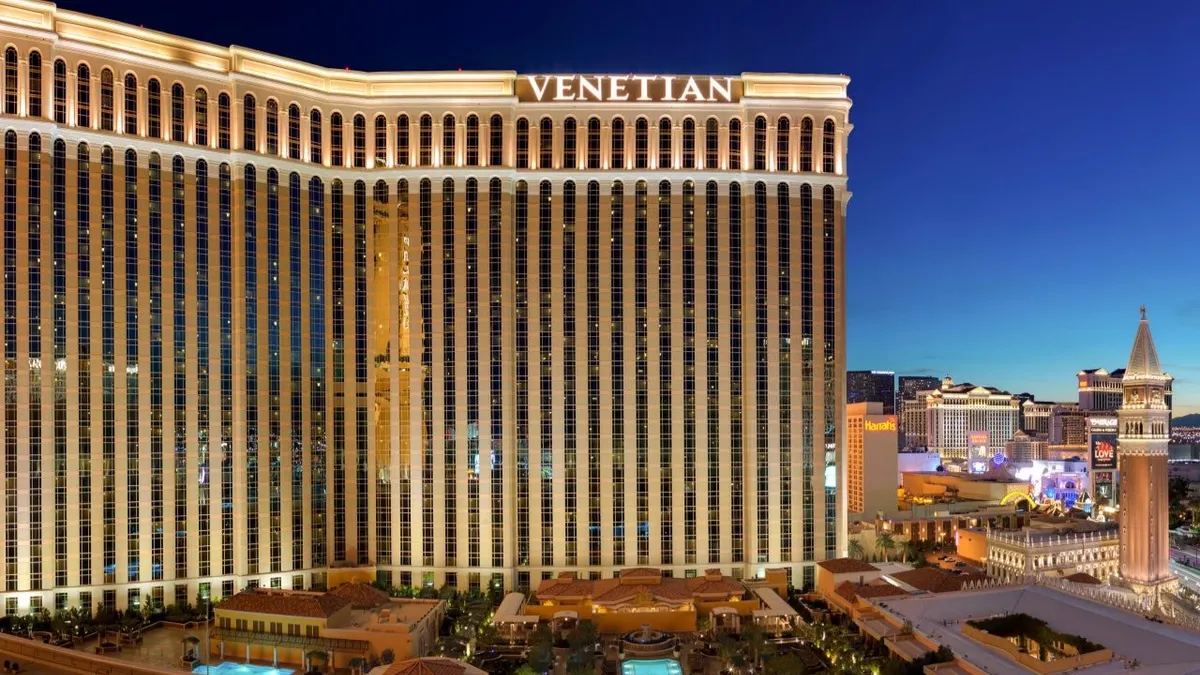
If the restaurant is a third-party concept (such as Preen Inc.’s work on Howlin’ Ray’s at The Venetian in Las Vegas), that character comes from infusing the restaurant’s core brand with a sense of a place. Las Vegas’ glitz and glamour led to a “dark mode” for Howlin’ Ray’s that melds the sensibilities of the hotel and city with the brand’s Los Angeles DNA. The palette went from modern LA down-home into Vegas black mirror and red neon, with a sexy cowgirl slant, as directed by Howlin’ co-owner Amanda Chapman.
For operators, close collaboration with the owner or chef is vital to maintaining the integrity of the concept.
Understand the ROI of a great floorplan and materials
A brilliant layout will pay off immediately, optimizing efficiency of staff and function, as well as creating creature comfort in the space. Using honest materials up front like raw copper or hard wood can pay off in terms of durability and aesthetic.
Concept with staffing levels in mind
Avoid labor-intensive, multistation market restaurant models unless there’s hard data to prove that traffic flow will keep the place fully functioning at all times. The same goes for independent areas that need to be specifically staffed, such as a main bar and a satellite bar within a restaurant. Another move for restaurants that serve multiple parts is to provide options for screening and reducing the footprint at various times of operation.
That said, there’s one staffing decision that could drive success for the entire concept:
Having a host. Not a host who seats someone, but a personality that is of the restaurant, someone who knows everyone and is a character in their own right.
Think beyond the property
Brand partnerships and marketing to the local community are mainstays in restaurant operations for a reason, and that’s just as important for hotel F&B. Howlin’ Ray’s has a brand partnership with Adidas, which gives the chain brand visibility.
For Socalo at the Gateway Hotel in Santa Monica, California, the restaurant’s chefs/owners Mary Sue Millikin and Susan Feniger chose a casual Mexican offering that resonated with the guests and the community. So, the design has booths and a bar that evoke the comfort of a diner.
Making the numbers work isn’t just a question of revenue and cost management. Hotel operators who understand how to create concepts that resonate with guests and the community will be the long-term winners in up and down cycles.