The following is a guest post from Jackson Thilenius, senior principal at design studio DyeLot Interiors. Opinions are the author’s own.
For the owners of the record-setting 1,477 conversion hotel projects in Q3 2025, success means mastering planning, concept and execution to maximize ROI and market share. Soft growth projections for ADR and RevPAR, as well as lengthening construction timelines, are forcing owners to uncover every possible efficiency and revenue driver to max out ROI and market share.
That starts with understanding that there is no “one-size-fits-all” solution when it comes to repositioning a hotel, especially one that may not have a standard layout or amenities. The best way for investment owners to build success for their projects is to take the time and do due diligence in order to gain a thorough understanding of the local market, the building’s physical quirks and the subtleties of the target brand’s standards.
Here are five steps to optimize conversion, regardless of the floor plan, programming or amenities:
Get the needed documentation ready first.
Have a survey prepared of the existing conditions. Accurate surveys are a pivotal tool in understanding the property and will save significant time and money during a repositioning effort.
Knowing when the last MEP upgrades were made, or (especially in states such as California), determining if seismic upgrades meet code, provides key information when it comes to establishing a project budget. Surveys also help get ahead of any surprises caused by changes to the building after any original architectural drawings were completed. It could be something as simple as a drop soffit hiding new plumbing, or renovations that significantly altered the programming of the hotel as its operational needs evolved over the years. Unknown structural issues have the potential to dramatically increase budget overruns, particularly if new structural components are required to free-span expansion areas.
Pick the brand that fits the asset
Don’t pick a flag solely based on incentivized franchise agreements. Think about what brand personality can best complement the physical attributes of the hotel.
Leaning into the strengths and positive attributes within an existing asset can build an authentic narrative for guest engagement that is unique to the hotel. For example, a property in a scenic hiking location has more programmatic flexibility regarding the size of its fitness center. Meanwhile, a destination resort with limited outdoor resources might see a day spa as a pivotal amenity. Understanding a brand narrative’s contextual foundation will amplify the hotel’s positioning.
Master the PIP
Make sure every stakeholder in the project has the PIP in hand before any project decisions are made. That includes the interior designer, the procurement agent and the branding team. This saves time and money by aligning the brand narrative, design concept and purchasing with target flag expectations.
Inexperienced owners or stakeholders who are new to the brand may miss nuances within the PIP document. In addition, there are often boilerplate comments within the PIP that are designed to ensure consistency. Brands can be more flexible on how those expectations are met if there are creative alternatives available.
For example, if a brand standard requires a grab-and-go in the lobby, but the floor plan doesn’t have the square footage, a possible strategy could be to display only select items that reflect the brand narrative, while storing additional items in the back-of-house, available by request. This turns a challenging PIP requirement into a bespoke satisfaction-enhancing concierge experience. Changing the optics through an operational solution, supported by great design integration, can turn spatial challenges into positive touchpoints.
Use community engagement to find value in challenging floor plans
Many repositionings require adding programming or finding value in square footage that no longer serves its original function. Figure out how to turn those challenges into signature moments.
A disused group check-in could become a community art gallery that draws guests into the space and enhances the hotel’s brand positioning. Structural walls can be transformed into signature moments that take advantage of available spaces and feel more bespoke and less expansive. Creative nimbleness is key for managing costs when it comes to tough layouts. This kind of creativity can uncover opportunities that enhance the guest experience and add a sense of discovery.
Leverage lighting and FF&E solutions
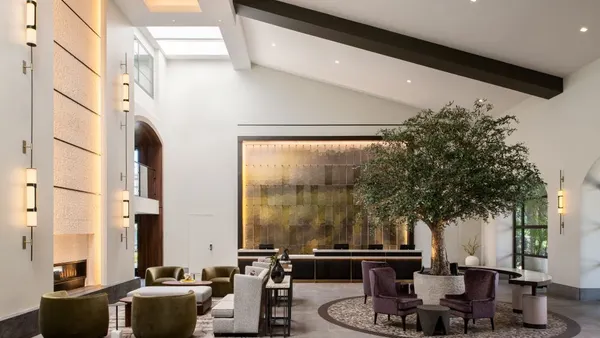
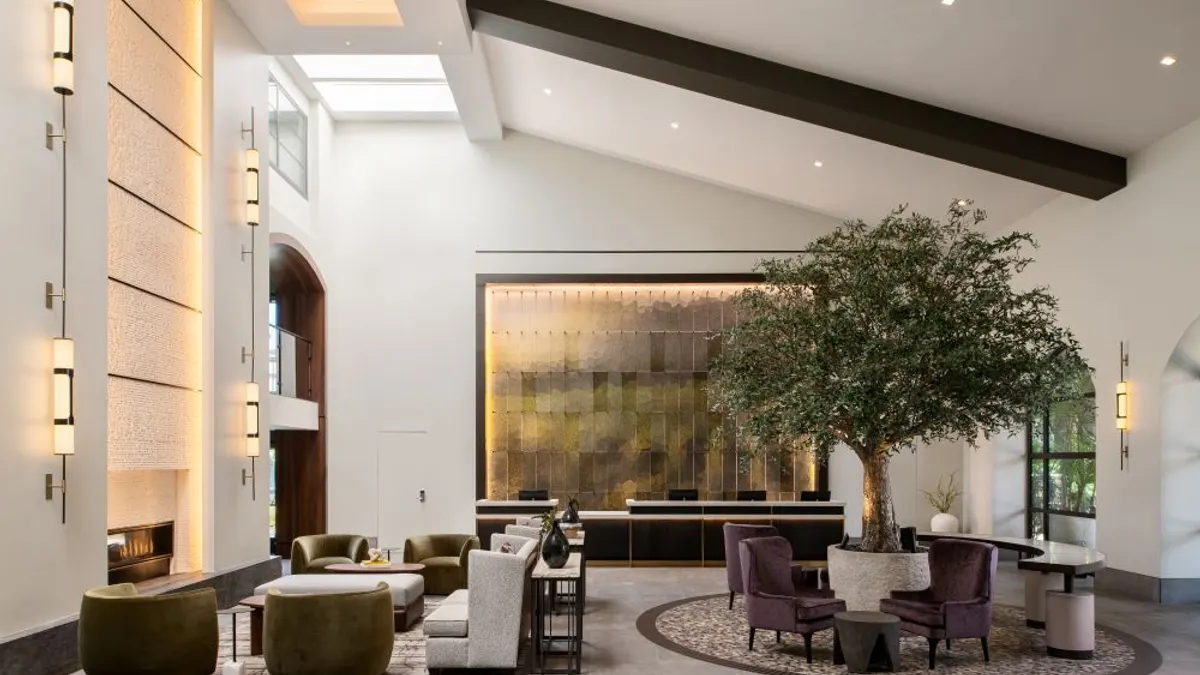
Architectural intervention isn’t the only way to take a dated or awkward space and turn it into a pillar of the hotel’s identity. Light levels and focused highlighting can reduce visual noise and unify a hierarchy of atmospheric design features, as well as enhance guest touchpoints.
High-backed FF&E and movable pieces also help delineate the guest journey and define spatial function. Thoughtful, character-rich groupings can help create nodes for guest interaction, allowing memorable exchanges and subtle hosting opportunities without new construction.
Ultimately, reflagging will likely continue to be a powerful development driver in 2026. Mastering that art represents positive RevPAR and increased ADR even in a market with an uncertain forecast.