Travel is still a priority for U.S. consumers, according to Deloitte’s 2026 Travel Industry Outlook. However, an increasing level of financial caution across all income levels could stall some of the growth that bolstered leisure and corporate travel following the COVID-19 pandemic.
While there are no immediate indicators of a major slowdown or decline in travel demand, Deloitte’s research pointed to widespread financial pessimism and economic uncertainty. If this attitude persists, “the year ahead could see many travel metrics plateau.” If the apprehension increases, the report continued, “especially among very high-income Americans, it could be an even slower grind.”
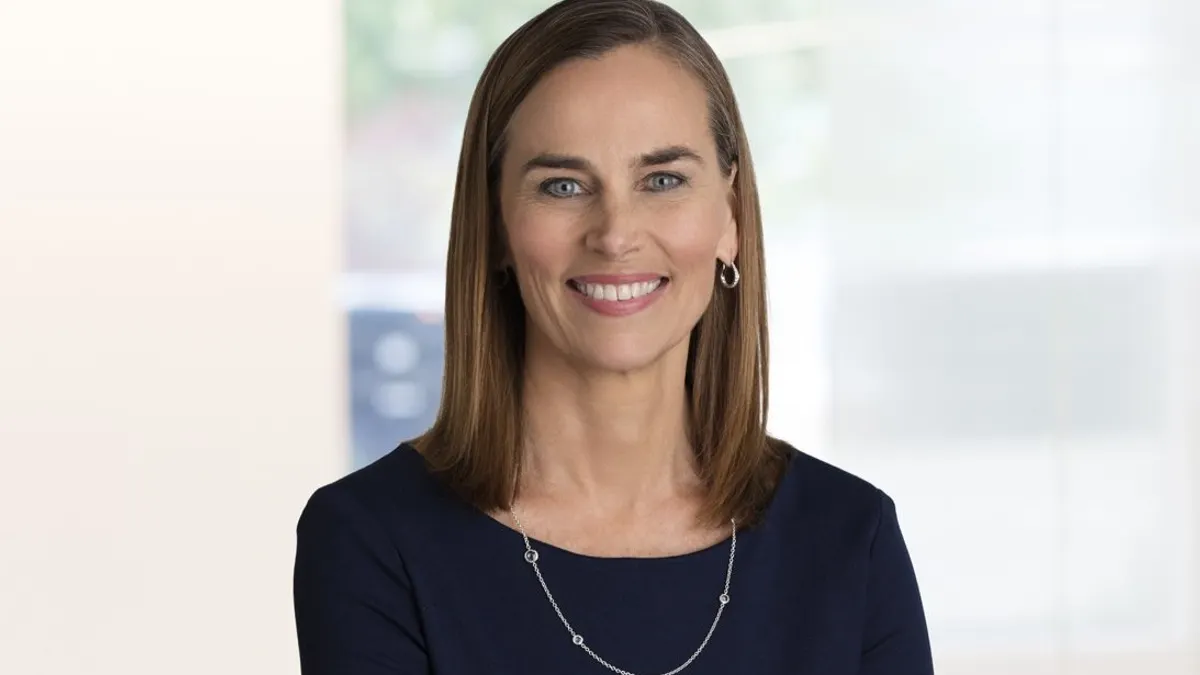
“We are definitely seeing a bit of a pullback [on travel],” Kate Ferrara, Deloitte’s vice chair and U.S. transportation, hospitality and services sector leader, said in an interview with Hotel Dive, citing a reduction in consumer spending and an increased focus on value planning shorter trips. Consumers still want experiences, Ferrara said, but are approaching spending with caution.
That caution is playing out across all income levels, Ferrara said, even among the more affluent travelers who fueled much of the pandemic rebound. “I think that is something that surprised us a little in the report,” Ferrara said.
Luxury bifurcation continues
The ultra-luxury space appears resilient, the report said. However, airlines and hotels may need to refine their target marketing to capture the more selective, value-conscious affluent travelers who are driving travel spending amid a growing wealth bifurcation.
Deloitte’s report also identified a “cautious class” of leisure travelers, meaning high-income Americans (earning $200,000 and above per year) whose negative financial sentiment has increased. According to the report, negative financial sentiment among the cohort jumped to 15% in 2025 from 9% in 2024.
Although higher-income Americans are more likely to travel and spend on upgrades, they’re “planning fewer and more conservative trips than their comfortable peers,” the report said.
“People are spending more on things like housing and healthcare and food,” Ferrara said. “So in terms of what's left over, and in terms of spend for things like leisure travel, I think there's a sense of uncertainty around that.”
Corporate travel may also be slowing down, the report said. In Deloitte’s 2025 Corporate Traveler Survey, 53% of frequent corporate travelers, meaning travelers who took 10 or more trips per year, said they planned to travel three or more times per month on average, down from 63% in 2024.
Since both frequent corporate travelers and higher-income travelers are more likely to book upgrades, that perk may be particularly exposed in a spending pullback, per the report.
“Midscale and upscale destination resorts and city hotels could see erosion of occupancy or rates as higher-income travelers become more deal-sensitive or shorten their stays, and business travelers take fewer trips,” the report said.
In particular, the more mass-market luxury space (meaning spaces with ADRs under $500 in most markets) may be soft in 2026. But ultra-luxury travel products, including long-haul business class airfare and hotel rooms with four-figure ADRs, may not be affected soon, the report added.
Younger travelers drive the market, sustainability
Generationally, millennials and Generation Z now account for half of all travelers, per the report. In particular, Gen Z accounted for 14% of the travel market in 2025, up from 8% in 2024, which is especially notable “given their relatively lower earning power.”
Ferrara attributed the increase in younger travelers in part to social media-fueled, post-pandemic wanderlust and an emphasis on experiences over material goods. More than half of Gen Z said they used short-form social video for travel research, compared to 34% of millennials and 14% of Gen X and boomers combined, per the report.
Meanwhile, Ferrara said Generation X is spending more on upgrades and international travel. “There's a bit of a difference there in terms of who has the money to spend on first class tickets, or more luxury hotels,” Ferrara said.
The report also highlighted consumer expectations related to sustainability, particularly among Gen Z and millennials, Ferrara said, adding that younger travelers factor sustainability into how they book their travel and accommodations.
She said the travel industry needs to consider the business value of making more sustainable choices instead of focusing on potential legislative mandates or regulations. “[It’s about] getting a pulse on what’s important to their key customers and making sure that that's implemented or highlighted,” Ferrara said.
According to the report, 38% of millennial and 42% of Gen Z travelers said they take sustainability into account when planning trips. That’s about double that of baby boomers, and 10 percentage points more than Gen X, per the report.
Artificial intelligence adoption is increasing
Twenty percent of travelers said they used generative AI tools for trip planning in late 2025, three times as many as in 2022, per the report.
“Particularly for Gen Z and millennials, the use of AI in the travel experience is increasing exponentially,” Ferrara said, in part because the tools are getting better. “It's not just asking [AI] where you should go, or doing research on travel destinations,” she said. “There's a lot in there around personalization and using agents to do everything from research down to booking and making a lot of those suggestions around travel experiences.”
However, Ferrara said travel companies “really need to figure out ways to embrace AI to personalize their offers” and understand that the technology continues to improve.
“The winners in this are going to be the companies that also figure out the tools and continue to do things like cross-selling and using apps,” Ferrara said, highlighting opportunities for hotels to include agentic commerce on their websites that might allow customers to order tickets to a show or request upgrades.
Consumers continue to want a more personalized travel experience, Ferrara said, however, “I'm not sure that’s what they're getting.”
“Yes, there's apps for hotels that you can go in and say you like firm pillows, or these are my preferences. But I don't know if we're at a point yet where you check into a hotel and you get there and your firm pillows are there.”